Adolescent gynaecology
Adolescent gynaecology is care for girls and young women, from about 10 to 19 years, who have questions or problems with periods, pain, hormones, body changes or health. At EVE Women and Fertility Clinic in Gunjur, Bangalore, Dr. Swati Shree offers a gentle, private, unhurried first visit, so that a young person gets honest answers and a parent gets reassurance.
At a glance
- Who
girls from about 10 to 19 years, usually with a parent or guardian
- Common reasons
irregular, heavy, painful or missing periods, PCOS signs, acne and hair growth, vaginal discharge, vaccination advice
- First visit
a conversation, with an examination only if needed
- Privacy
the young person may speak to the doctor alone for part of the visit
- Guardian consent
needed for patients under 18
- Good first age
many experts suggest a first reproductive health visit between 13 and 15, even without a problem



What is normal in the first years
Periods usually begin between 10 and 15 years. For the first two years, cycles can be irregular and vary from about 21 to 45 days. Mild cramps are common. Concern grows if there are no periods by 15 years, if periods are very heavy or very painful, or if pain keeps a girl from school.
Common concerns
- Painful periods (dysmenorrhoea): common, and often relieved with simple treatment. Severe pain that does not respond may need a check for endometriosis.
- Irregular or heavy periods: may reflect the immature hormone cycle, but heavy bleeding can cause anaemia and should be checked.
- PCOS: diagnosing PCOS in teenagers needs care, because irregular cycles can be normal in the first years. See the PCOS page.
- Missing periods: needs a check for pregnancy, weight, thyroid, hormones and structure.
- Discharge and itching: common causes are simple to treat.
- HPV vaccination: India's national programme offers a free single dose at 14. See the HPV page.
What happens at EVE
A welcome conversation
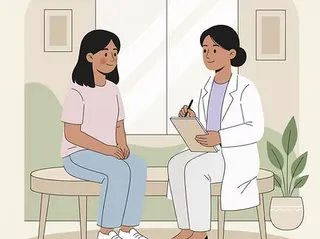
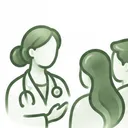
Dr. Swati speaks with the young person, and the parent, about what is worrying them.
Time alone, if wished
Part of the visit can be one-to-one, so a teenager can ask what she may not ask in front of a parent.
Examination only if needed
A general check and abdominal examination are done. A pelvic or internal examination is rarely needed in young girls. An abdominal ultrasound may be used.
A plan
The plan is explained to both. It may include tests, a treatment, lifestyle advice or a follow-up.
Follow-up
for repeat checks, and ongoing support.
What Dr. Swati will not do
She will not pressure a young person, will not share what she says with others without a good reason and consent where possible, and will not do an internal examination unless clearly necessary and the young person agrees. Where safety is at risk, she follows the law and explains this.
How to prepare
- Note the date of the first period and the last three periods
- Write down questions, or let the teenager write her own
- Bring any earlier reports
- Let the teenager decide how much to say, and who is in the room
FAQs
At what age should a girl first see a gynaecologist?
There is no fixed age. A first reproductive health visit between 13 and 15 is suggested by some experts, and sooner if there are problems such as very painful periods, very heavy bleeding, or no periods by 15. Many girls need only a conversation.
Will my daughter need an internal examination?
Rarely. Most teenage concerns are assessed by talking, a general check and, if needed, an abdominal ultrasound. An internal examination is done only when it is clearly necessary and with the young person's agreement. We explain first.
My daughter's periods are irregular. Is this normal?
It is common for the first two years after periods begin. Cycles can range from about 21 to 45 days. See a doctor if periods are very heavy, come with severe pain, stop for 3 months, or have not begun by 15.
Can a teenager come alone?
Patients under 18 attend with a parent or guardian, who gives consent. The teenager can also speak with the doctor alone for part of the visit. This helps young people ask honestly.
Is PCOS common in teenagers?
PCOS can begin in the teen years, but diagnosis needs care, as irregular periods and acne can also be normal in early puberty. Dr. Swati uses age-appropriate criteria and avoids over-labelling. Lifestyle support helps either way.
Should my daughter get the HPV vaccine?
Yes, it is best given early. India's national programme now offers a free single dose to 14-year-old girls, and private vaccination is available for other ages. Dr. Swati advises on the plan. See the HPV vaccination page.
Sources
- ACOG Committee Opinion: The initial reproductive health visit
- ACOG Committee Opinion: Menstruation in girls and adolescents, using the menstrual cycle as a vital sign
- International evidence-based guideline for the assessment and management of PCOS (2023)
- Ministry of Health and Family Welfare, National HPV vaccination programme, 2026