
Tubal patency test (HSG)
A tubal patency test checks whether your fallopian tubes are open, so that an egg and sperm can meet. The most common one is hysterosalpingography (HSG), a quick X-ray after a dye is passed through the womb. At EVE Women and Fertility Clinic in Gunjur, Bangalore, Dr. Swati Shree plans an HSG as part of a fertility evaluation, and explains the result and what it means for your treatment.
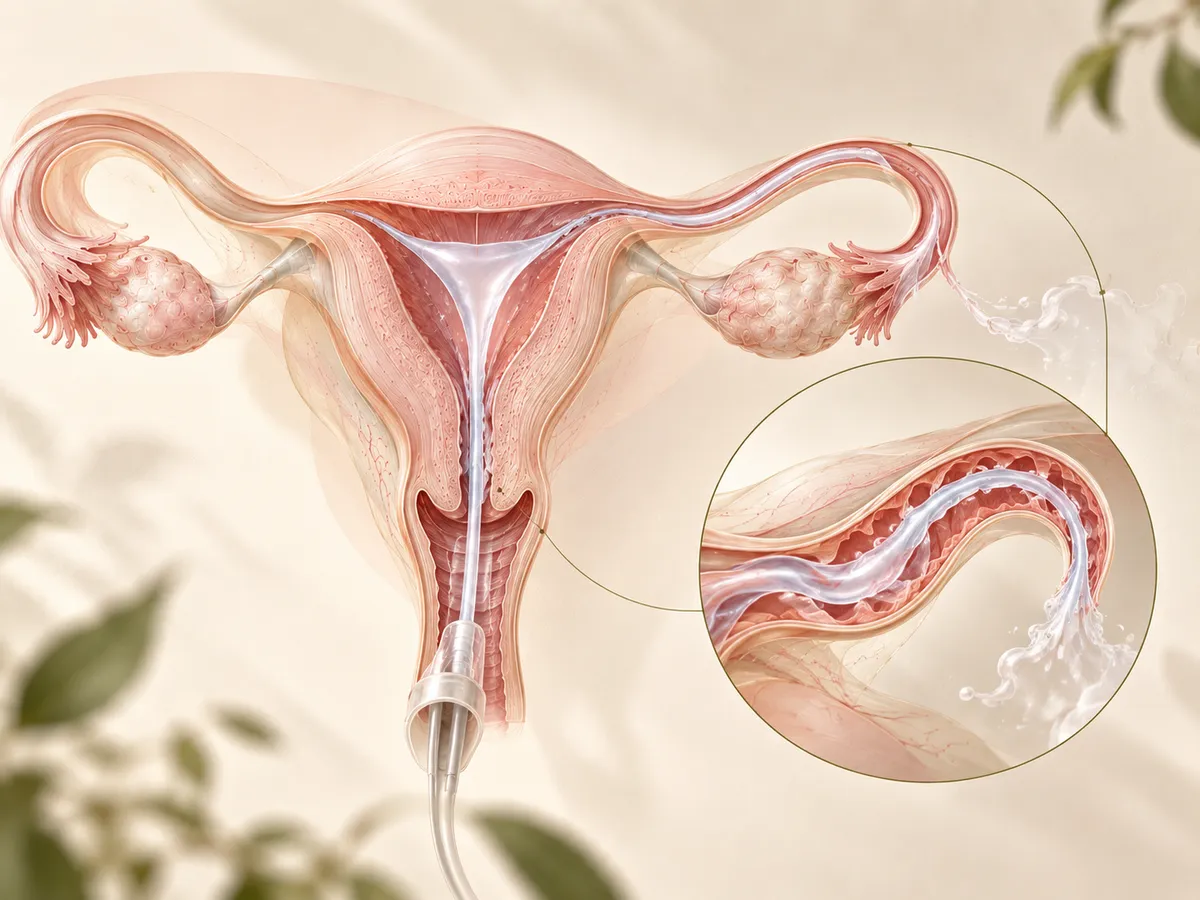
At a glance
- What it shows
whether the tubes are open, the shape of the uterine cavity, and some tubal abnormalities
- How
a thin tube is passed through the cervix, contrast dye is introduced, and X-ray images are taken
- When
after your period ends and before ovulation, usually between day 6 and day 12
- Time
about 10 to 15 minutes
- Sensation
cramping for a few minutes, usually settling soon
- Do not do it if
you might be pregnant, have an active pelvic infection or have heavy bleeding
- Where




Why it matters
If both tubes are blocked, natural conception and IUI are unlikely to work, and IVF is usually advised. If at least one tube is open, IUI or timed attempts can be considered. Knowing this early prevents months of treatment that cannot work.
What happens at EVE
Planning
Dr. Swati chooses a day in your cycle, and checks that you are not pregnant. You may be asked to take a pain-relief medicine beforehand, and sometimes an antibiotic, as advised.
The test
You lie on your back. A speculum is placed, the cervix is cleaned, and a thin catheter is introduced. Dye is passed slowly while images are taken. You may feel menstrual-type cramps.
Right after
You can rest for a short time, and go home. You may have light spotting, or cramping, for a day.
Results
The images are reported, and Dr. Swati explains them: both tubes open, one open, both blocked, or an abnormal uterine cavity.


Other ways to check the tubes
- Saline or contrast ultrasound (HyCoSy, or HyFoSy): fluid or foam is introduced during an ultrasound. There is no radiation, and it can be done in the scan room.
- Laparoscopy with dye test: a keyhole surgery under anaesthesia that shows the tubes and the pelvis, usually reserved for those with symptoms or suspected endometriosis.
Dr. Swati advises the best method for you.
Risks and limits
- Cramping, spotting and a short vasovagal faint are common and settle quickly
- Pelvic infection after the test is uncommon, and is why antibiotics may be given if there is a history of infection
- Allergy to the dye is rare. Tell us about any allergies
- X-ray exposure is small, but the test is not done if pregnancy is possible
- HSG shows if tubes are open, but not whether they work normally
How to prepare
- Book it for the correct day, after bleeding stops and before ovulation
- Avoid intercourse from the end of your period until the test, to avoid an early pregnancy
- Bring a companion if you like
- Tell us about allergies, past infections and any chance of pregnancy
- Take medicines as advised, and eat lightly beforehand
FAQs
Is an HSG painful?
Most women feel menstrual-type cramps for a few minutes as the dye passes through, and some feel nothing much. Pain-relief medicine beforehand helps. The test takes 10 to 15 minutes, and cramping usually settles within an hour.
When should an HSG be done?
After your period has finished and before ovulation, usually between day 6 and day 12 of a regular cycle. This reduces the chance of an undetected early pregnancy and gives clear images of the cavity. Dr. Swati confirms your date.
Can an HSG help me get pregnant?
Sometimes. A few women conceive in the months after an HSG, possibly because the flush clears minor blockages. This is not the aim, and it should not be relied on, but it explains why some couples conceive soon after the test.
What if my HSG shows a blocked tube?
A blocked tube may be real or caused by temporary spasm. Dr. Swati may repeat or confirm with another test. If one tube is open, IUI may still be possible. If both are blocked, IVF is usually advised. Surgery is sometimes considered in selected cases.
Is HSG safe?
Yes, when done correctly. Radiation is low, and serious complications such as infection are uncommon. It is not done if you are pregnant, have an active pelvic infection, or have unexplained heavy bleeding. Tell us about all allergies and previous infections.
How soon can I try to conceive after an HSG?
You can usually try in the same cycle, unless advised otherwise. If you have had spotting or cramps, wait until they settle. If you have fever, severe pain or a foul discharge in the days after the test, contact us the same day.
When to get help straight away. Fever, severe lower abdominal pain, foul-smelling discharge or heavy bleeding in the days after an HSG need urgent review. Call us, or go to the nearest hospital emergency.
What does an HSG test cost in Bangalore?
Charges differ between diagnostic centres and clinics, and depend on whether contrast or ultrasound dye is used. Ask the clinic for the exact fee when you book, including any review appointment after the test.
Sources
- ASRM Practice Committee, Role of tubal surgery in the era of assisted reproductive technology
- NICE Guideline CG156: Fertility problems
- ESHRE Guideline: Unexplained infertility (2023)