TESA and PESA (surgical sperm retrieval)
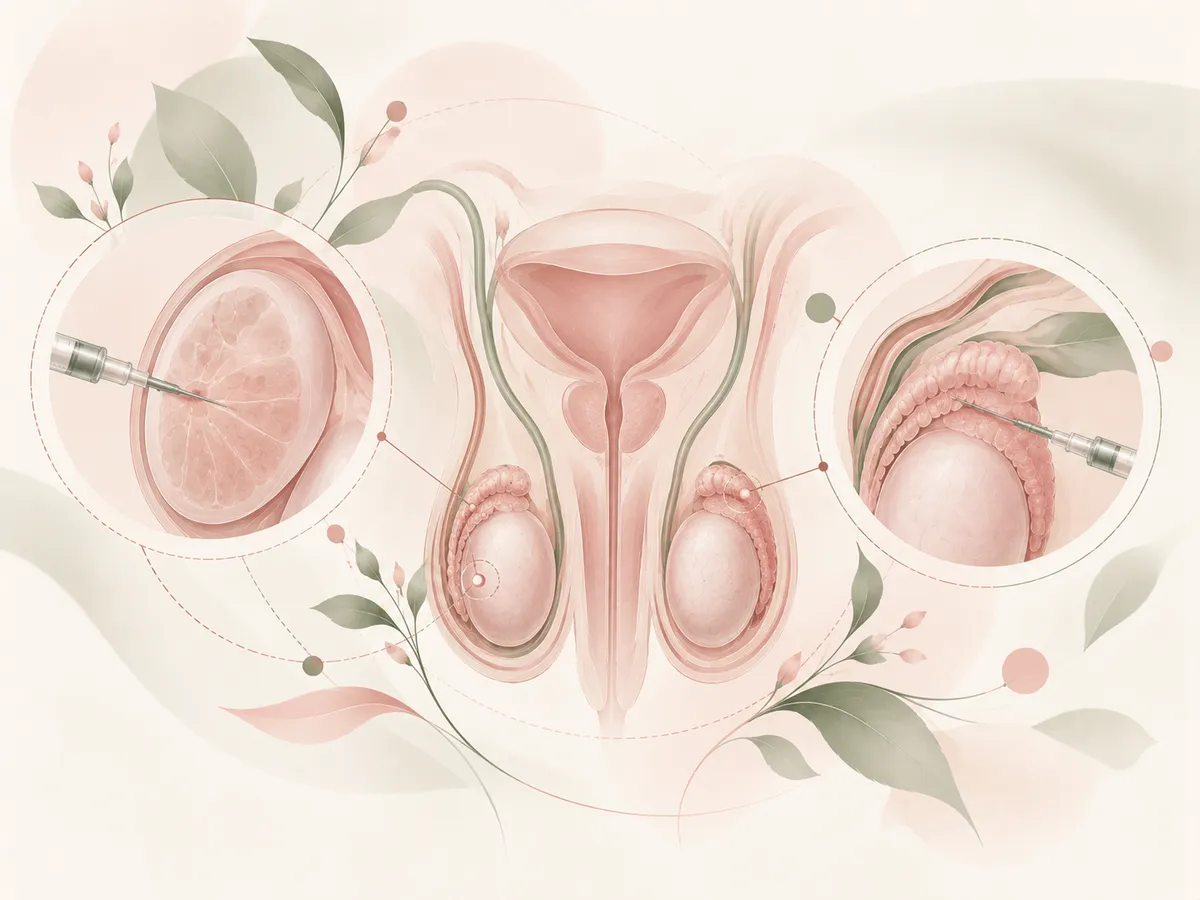
TESA (testicular sperm aspiration) and PESA (percutaneous epididymal sperm aspiration) are procedures that collect sperm directly from the testicle or the epididymis, using a fine needle, for men whose semen contains no sperm. The sperm found are used in IVF with ICSI. At EVE Women and Fertility Clinic in Gunjur, Bangalore, Dr. Swati Shree helps couples understand whether sperm retrieval is the right path, and plans the treatment with them.
At a glance
- Who needs it
men with azoospermia, meaning no sperm in the semen
- Obstructive azoospermia
sperm are made, but a blockage stops them reaching the semen. Sperm retrieval often finds sperm.
- Non-obstructive azoospermia
sperm production is very low or absent. Retrieval may still find sperm in some men.
- PESA
needle from the epididymis. TESA: needle from the testicle.
- Anaesthesia
usually local, sometimes with sedation
- Time
about 15 to 30 minutes
- Used with
IVF and ICSI, with fresh or frozen sperm
- Result
not every attempt finds sperm



Understanding azoospermia
Azoospermia is found in about 1 in 100 men, and in a larger share of men with infertility. It has two main types. In obstructive azoospermia, the testicles make sperm but a blockage, from infection, surgery or being born without the tube (vas deferens), stops sperm leaving the body. In non-obstructive azoospermia, the testicles produce very few sperm or none, due to hormonal, genetic or other causes. The type decides whether PESA, TESA or another procedure is suitable.
How the evaluation works
Confirm azoospermia
with at least two semen analyses, with the centrifuged sample checked for rare sperm.
History and examination
for infection, surgery, undescended testis, medicines, and varicocele.
Hormone tests
(FSH, LH, testosterone) and scrotal ultrasound.
Genetic tests
such as karyotype and Y chromosome microdeletion, in selected men, with counselling.
Plan
Dr. Swati explains whether retrieval is likely to help, and which procedure is suitable. In some cases, a urologist or andrologist performs the retrieval.

What happens at the procedure
Timing with your partner's cycle
For fresh use, retrieval is planned on or near the day of the partner's egg collection. For frozen use, it can be done at any time.
Anaesthesia
Local anaesthetic is given, sometimes with sedation.
Aspiration
A fine needle is passed through the skin into the epididymis (PESA) or the testicle (TESA), and fluid or tissue is withdrawn.
In the laboratory
An embryologist checks the sample for sperm.
Use
Sperm found are used immediately for ICSI, or frozen for a later cycle.
Recovery
Most men go home the same day. Mild pain, swelling or bruising may last a few days.

Risks and limits
- Pain, swelling and bruising are common and settle in days
- Bleeding, infection are uncommon
- Haematoma (a collection of blood) is rare
- Sperm may not be found, especially in non-obstructive azoospermia. The couple may then discuss other options, including another retrieval method, using donor sperm (where the law permits), or other paths.
- Genetic risks: some causes of male infertility can be passed on to sons. Genetic counselling is advised where relevant.
- TESA and PESA retrieve sperm. They do not treat the cause of azoospermia.
How to prepare
- Complete the evaluation and hormone tests first
- Share all earlier reports and surgical history
- Tell us about blood-thinning medicines and allergies
- Plan with your partner's IVF cycle, if fresh retrieval is intended
- Arrange for someone to accompany you home
ART rules
TESA, PESA and ICSI fall under the ART (Regulation) Act, 2021. Consent and counselling are required. Sex selection is prohibited.
FAQs
What is the difference between TESA and PESA?
PESA takes sperm from the epididymis, the coiled tube behind the testicle, with a needle. TESA takes sperm or tissue from the testicle itself. PESA is often used in obstruction, and TESA when production is the problem. The choice depends on your tests.
Is TESA or PESA painful?
Local anaesthetic numbs the area, so you feel pressure rather than sharp pain. Sedation may be added. Mild aching, swelling and bruising are common for a few days. Most men go home the same day, and return to work within a few days.
Will sperm definitely be found?
Not always. In obstructive azoospermia, the chance of finding sperm is high. In non-obstructive azoospermia, it is lower and depends on the cause. Dr. Swati explains your likely situation before the procedure, so expectations are realistic.
Can sperm from TESA or PESA be used for IUI?
No. Sperm retrieved this way are few and need ICSI, where one sperm is injected into one egg in the IVF laboratory. IUI needs many motile sperm and is not suitable here.
Can retrieved sperm be frozen?
Yes, often. Frozen sperm can be used in a later IVF-ICSI cycle, which avoids repeating the procedure. Not all samples survive freezing, so the laboratory advises on the best plan.
Does a male fertility problem mean my sons will have it too?
Sometimes. Certain genetic causes, such as Y chromosome microdeletions or some conditions affecting the vas deferens, can be passed on. Genetic counselling and testing, when advised, help you understand any risk before treatment.
What does TESA or PESA cost in Bangalore?
The procedure fee depends on whether it is done alone or as part of an IVF-ICSI cycle, plus lab and storage charges. Costs vary, so ask for a written estimate at your consultation before deciding.
Sources
- AUA/ASRM Guideline: Diagnosis and treatment of infertility in men (2020)
- EAU Guidelines on Sexual and Reproductive Health
- WHO laboratory manual for the examination and processing of human semen, 6th edition (2021)
- ART (Regulation) Act, 2021 and Rules, 2022