
Should you freeze your eggs, and where do you start?

Short answer
Start egg freezing with a consultation and an egg-reserve check (AMH and antral follicle count). Chances are highest when eggs are frozen before about 35, and more eggs give a higher chance later. I offer egg-freezing consultations at EVE Women and Fertility Clinic, Gunjur. Stimulation is planned and monitored with her, and egg collection and storage take place at a registered Level 2 ART centre, through EVE's renowned partner fertility centres in Bangalore.
Many women in Bengaluru are building careers, finishing studies or waiting for the right partner, and want to know whether egg freezing makes sense for them. It is a real option, but not a guarantee. This page explains who it suits, how many eggs are usually needed and where each step happens.
What is egg freezing (oocyte cryopreservation)?
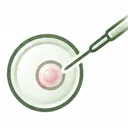
Egg freezing means collecting mature eggs from the ovaries and storing them at very low temperatures for future use. The eggs are frozen by vitrification, a rapid method that protects them from ice damage. Later, the eggs are thawed, fertilised with sperm by ICSI, and an embryo is transferred to the uterus.
Women freeze eggs for two broad reasons:planned (elective) freezing to keep options open, and medical fertility preservation before treatment such as chemotherapy.
I am 30 and not planning a pregnancy for a few years. Should I consider egg freezing?
It depends on your plans, your egg reserve and your own priorities. At 30, many women still have a good chance of natural conception for several years. Egg freezing may be worth discussing if:
- You expect to delay pregnancy until your late thirties or beyond
- Your AMH or antral follicle count is lower than expected for your age
- You have endometriosis, a family history of early menopause, or ovarian surgery in the past
A reserve test gives a snapshot of how many eggs remain. It does not measure egg quality or predict natural fertility on its own. A consultation helps you weigh the timing, cost and chances.
How many eggs should I freeze?
There is no single right number. Age at freezing matters most, because younger eggs are more likely to be chromosomally normal.
A widely used counselling model by Goldman and colleagues (Human Reproduction, 2017) estimates the chance of a live birth from the woman's age at freezing and the number of mature eggs stored. In that model, the chance rises with each extra egg and falls with age, so the same number of eggs frozen at 35 gives a clearly better chance than at 39. These are population estimates, not a prediction for you or a result at any clinic. Women freezing at older ages usually need more eggs, sometimes over more than one cycle, for a similar chance.
The egg-freezing process step by step
Consultation and tests
History, AMH, an ultrasound for antral follicle count, and routine blood tests.
Ovarian stimulation
Daily hormone injections for about 8 to 12 days to help several eggs mature.
Monitoring
Ultrasound scans and blood tests to track follicle growth and adjust doses.
Trigger injection,
timed so the eggs are ready for collection.
Egg collection
under sedation, about 36 hours after the trigger.
Vitrification and storage
of the mature eggs.





Where each step happens
| Step | Where |
|---|---|
| Consultation, reserve testing and stimulation plan | EVE, Gunjur, with Dr. Swati Shree (blood tests through a laboratory) |
| Stimulation monitoring scans | Planned and reviewed by Dr. Swati Shree; scans done at the partner centre |
| Egg collection | Partner Level 2 ART centre |
| Vitrification and storage | Partner Level 2 ART centre or registered ART bank |
| Follow-up and future planning | EVE, Gunjur |
EVE is a registered Level 1 ART clinic, so egg collection and storage are not done at EVE.
Is egg freezing possible if I have PCOS?
Yes. Women with PCOS often have many follicles and may collect a good number of eggs. The ovaries can respond strongly, which raises the risk of ovarian hyperstimulation syndrome (OHSS). Doctors lower this risk with gentler protocols, careful monitoring and a suitable trigger.
What does Indian law say?
The Assisted Reproductive Technology (Regulation) Act, 2021 sets the rules:
- Egg collection and storage must take place at a registered ART clinic or ART bank.
- Written consent is needed before any eggs or embryos are frozen.
- ART services can be given to a woman above 21 and below 50 years of age.
- The storage period for your own frozen eggs, and how it is renewed, should be confirmed in writing with the centre that stores them.
Risks and limits
- OHSS, usually mild, rarely severe
- Procedure risks at egg collection, such as bleeding or infection, which are uncommon
- No guarantee. Not every egg survives thawing, fertilises or becomes a pregnancy.
- Age still matters. Pregnancy at an older age carries higher risks for the mother, even with younger eggs.
What affects the cost?
The main factors are the medicines (dose depends on your reserve and response), the number of cycles needed, the procedure fees at the Level 2 centre, and yearly storage charges. Ask for a written estimate that lists each part before you start.
Trying to conceive can be stressful. It is fine to ask for counselling support at any stage.
In short
- Start with a consultation and an AMH and antral follicle count test.
- Age at freezing is the biggest factor. Chances are highest before about 35.
- More mature eggs give a higher chance, but no number guarantees a baby.
- At EVE, I plan and guide stimulation. Monitoring scans, collection and storage happen at a partner Level 2 centre.
Next step
Egg freezing is a personal decision, and honest information makes it easier. To check your egg reserve and talk through your options, book a consultation with Dr. Swati Shree at EVE Women and Fertility Clinic, Gunjur, Bangalore, on +91 72049 21212.
Medical Disclaimer: This article is for educational purposes only and does not replace professional medical advice. Fertility treatment outcomes vary from person to person. Please consult a qualified doctor for diagnosis and treatment.
Frequently asked questions
At what age is egg freezing most likely to work?
Egg freezing gives the highest chance of a later live birth when eggs are frozen before about 35, because younger eggs are more likely to be chromosomally normal. Freezing after 35 is still possible, but more eggs are usually needed for a similar chance. Your AMH and antral follicle count help decide the timing for you.
Does egg freezing reduce my natural fertility?
No. Each month the ovaries recruit a group of follicles, and most are lost naturally. Stimulation rescues some of those same follicles that would otherwise be lost. It does not use up your future egg supply or bring menopause earlier. You can still try to conceive naturally later, and use frozen eggs only if needed.
Can I freeze my eggs if I am unmarried?
The ART (Regulation) Act, 2021 defines a "woman" seeking ART services as any woman above the age of 21, and does not tie that definition to marriage. Registered Level 2 centres apply the Act and their own consent rules. Ask the storing centre to explain its process, and I can guide you through the steps.
How long can eggs stay frozen in India?
Vitrified eggs do not appear to lose quality with time in storage. Under the ART Act, eggs must be stored at a registered ART clinic or bank, and the storage period that applies should be confirmed in writing with that centre. Storage is renewed and paid for yearly, with written consent.
Is egg freezing painful?
The daily injections use fine needles, and most women manage them at home after a short lesson. Some bloating and tenderness are common towards the end of stimulation. Egg collection is done under sedation, so most women feel little during it, with mild cramps for a day or two afterwards.
Should I freeze eggs or embryos?
Frozen embryos survive thawing slightly more reliably and give more information, because fertilisation has already happened. Freezing embryos needs sperm from a partner, and both partners share decisions about them later. Freezing eggs keeps the choice with you alone. Your doctor will discuss which suits your situation and relationship.
Does my employer's insurance cover egg freezing?
It depends on your policy. Some employers in Bengaluru, particularly in technology, offer fertility benefits that include egg freezing, while standard health insurance often does not cover planned freezing. Check your policy documents or ask your HR team, and request a written estimate from the treating centre to submit for any claim.
हिंदी में
एग फ्रीज़िंग (अंडे फ्रीज़ कराना) किसे करवाना चाहिए?
एग फ्रीज़िंग की शुरुआत सलाह और AMH व एंट्रल फॉलिकल काउंट जांच से होती है। 35 साल से पहले अंडे फ्रीज़ करने पर आगे गर्भधारण की संभावना सबसे ज़्यादा होती है, लेकिन यह गारंटी नहीं है। गुंजूर के EVE क्लिनिक में डॉ. स्वाति श्री सलाह और मॉनिटरिंग करती हैं, जबकि अंडे निकालना और स्टोर करना बेंगलुरु के पार्टनर लेवल 2 ART सेंटर में होता है। अपॉइंटमेंट के लिए +91 72049 21212 पर कॉल करें।
ಕನ್ನಡದಲ್ಲಿ
ಎಗ್ ಫ್ರೀಜಿಂಗ್ ಬೆಂಗಳೂರು
ಎಗ್ ಫ್ರೀಜಿಂಗ್ ಸಲಹೆ ಮತ್ತು AMH ಹಾಗೂ ಆಂಟ್ರಲ್ ಫಾಲಿಕಲ್ ಕೌಂಟ್ ಪರೀಕ್ಷೆಯಿಂದ ಆರಂಭವಾಗುತ್ತದೆ. 35 ವರ್ಷಕ್ಕಿಂತ ಮೊದಲು ಅಂಡಾಣುಗಳನ್ನು ಫ್ರೀಜ್ ಮಾಡಿದರೆ ಮುಂದೆ ಗರ್ಭಧಾರಣೆಯ ಸಾಧ್ಯತೆ ಹೆಚ್ಚು. ಗುಂಜೂರಿನ EVE ಕ್ಲಿನಿಕ್ನಲ್ಲಿ ಡಾ. ಸ್ವಾತಿ ಶ್ರೀ ಅವರು ಸಲಹೆ ಮತ್ತು ಮೇಲ್ವಿಚಾರಣೆ ನೀಡುತ್ತಾರೆ. ಅಂಡಾಣು ಸಂಗ್ರಹಣೆ ಮತ್ತು ಸಂಗ್ರಹವು ಪಾಲುದಾರ ಲೆವೆಲ್ 2 ART ಕೇಂದ್ರದಲ್ಲಿ ನಡೆಯುತ್ತದೆ. ಅಪಾಯಿಂಟ್ಮೆಂಟ್ಗಾಗಿ +91 72049 21212 ಗೆ ಕರೆ ಮಾಡಿ.
Questions this page answers
- What is egg freezing (oocyte cryopreservation)?
- I am 30 and not planning a pregnancy for a few years. Should I consider egg freezing?
- How many eggs should I freeze?
- Is egg freezing possible if I have PCOS?
- What does Indian law say?
- What affects the cost?
- At what age is egg freezing most likely to work?
- Does egg freezing reduce my natural fertility?
- Can I freeze my eggs if I am unmarried?
- How long can eggs stay frozen in India?
- Is egg freezing painful?
- Should I freeze eggs or embryos?
- Does my employer's insurance cover egg freezing?
Sources
- Goldman RH, Racowsky C, Farland LV, Munné S, Ribustello L, Fox JH. Predicting the likelihood of live birth for elective oocyte cryopreservation: a counseling tool for physicians and patients. Human Reproduction, 2017.
- European Society of Human Reproduction and Embryology. Female fertility preservation guideline, 2020.
- Assisted Reproductive Technology (Regulation) Act, 2021, Government of India.