
What is IUI treatment, who does it help and what happens in a cycle?
Short answer
Intrauterine insemination (IUI) places washed sperm inside the uterus around ovulation. It suits mild male-factor problems, ovulation disorders treated with medicines, unexplained infertility and some sexual or cervical factors, if at least one tube is open. I perform IUI at EVE Women and Fertility Clinic, Gunjur, a registered Level 1 ART clinic.
IUI (intrauterine insemination) is a fertility treatment in which washed, concentrated sperm are placed inside the uterus around the time of ovulation. It gives sperm a shorter path to the egg. IUI is simpler than IVF, takes only a few minutes and does not need anaesthesia.
What is IUI?
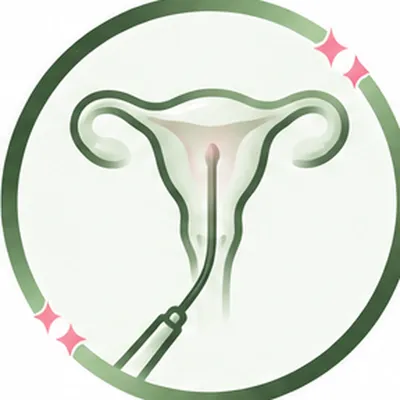
In a natural cycle, only a small share of sperm get through the cervix and into the uterus. In IUI, the semen sample is first "washed", which separates the healthiest moving sperm from the fluid. Using a thin, soft catheter, the doctor then places those sperm high in the uterus close to the time of ovulation.
Fertilisation still happens naturally inside the body, in the fallopian tube. That is the main difference from IVF, where eggs are collected and fertilised in a lab.
Who is IUI suitable for, and who should skip it?
IUI may suit couples with:
- Mild sperm problems, such as slightly low count or motility
- Ovulation problems, including PCOS, treated with ovulation medicines
- Unexplained infertility, when all standard tests are normal
- Difficulty with intercourse, or cervical factors
- At least one open fallopian tube confirmed by testing
IVF is usually discussed instead when there is:
- Blockage of both fallopian tubes
- A severe sperm problem
- Low egg reserve in a woman in her late thirties or older
- Moderate or severe endometriosis
Is IUI worth trying if your fertility reports are mostly normal?
Often, yes. When reports are normal, the ESHRE guideline on unexplained infertility (2023) recommends IUI with ovarian stimulation as a first treatment over simply waiting longer. Mild stimulation helps one or two eggs mature, and IUI improves the timing and number of sperm reaching them.
Age matters, though. For a woman under 35, a few IUI cycles are a reasonable start. Over 38, moving to IVF sooner may be advised. See unexplained infertility.
What happens in an IUI cycle, step by step?
Day 2 or 3 scan
A baseline ultrasound, done at a radiology centre, checks the ovaries and lining.
Medicines, if needed
Ovulation tablets or low-dose injections start, usually for about five days.
Follicle scans
From around day 9 to 10, follicular monitoring tracks egg growth.
Trigger injection
An hCG injection is given when the follicle is mature, to time ovulation.
Sperm wash
On IUI day, the male partner gives a fresh sample, which is washed and prepared.
Insemination
About 24 to 36 hours after the trigger, the sperm are placed in the uterus. It takes a few minutes.
Luteal support, if used
Progesterone may be prescribed to support the uterine lining.
Pregnancy test
A blood or urine test about 14 days after IUI.





What are the chances of pregnancy with IUI?
Chances depend mainly on the woman's age, the cause of infertility, the sperm count after washing and the number of cycles. UK national data from the Human Fertilisation and Embryology Authority (HFEA) show that birth rates per IUI cycle are highest in women under 35 and fall steadily with age.
Per cycle, IUI chances are lower than IVF, but they add up over several cycles. This is why a planned series of cycles is usually discussed, rather than judging IUI on a single attempt. Your doctor can explain what your own results suggest. No clinic can promise a pregnancy.
How many IUI cycles should you try before IVF?
Many specialists suggest three to four IUI cycles before discussing IVF, if the woman is under 38 and the tests support IUI. If IUI has not worked after that, the chance per cycle tends to fall, and IVF is usually the next conversation.
For women over 38, or with low egg reserve, the plan may be shorter. Read more about IUI or IVF and IVF consultation.
What are the risks and side effects of IUI?
IUI itself is a low-risk procedure. Most risks come from the medicines used to stimulate the ovaries.
- Cramping or spotting. Mild and short-lived after the procedure.
- Multiple pregnancy. More than one egg can be released, raising the chance of twins. Scans reduce this risk, and a cycle may be cancelled if too many follicles grow.
- Ovarian hyperstimulation (OHSS). Rare with the mild stimulation used for IUI.
- Infection. Rare.
Seek urgent care on 108 or 112 for severe abdominal pain, bloating, breathlessness, reduced urine or fever after treatment. In early pregnancy, one-sided pain, fainting or heavy bleeding also need urgent care.
How is IUI done at EVE Women and Fertility Clinic?
IUI is the assisted reproduction procedure EVE is registered for. The clinic holds Level 1 ART registration (Reg. No. KA/AC/2026/17763/L1/BENGALURU URBAN/465) under the ART (Regulation) Act, 2021. Consent forms are signed by both partners before treatment, as the ART Rules require.
I plan the cycle and perform the insemination at EVE in Gunjur. The follicle scans are done at a radiology centre on the days I set, and I read each report to decide when to give the trigger injection and fix the IUI day.
What affects the cost of IUI?
The cost of an IUI cycle depends on which medicines are used, how many scans are needed, sperm preparation and any luteal support. A natural-cycle IUI usually costs less than one with injections. You can ask for a written estimate before starting.
Trying to conceive can be stressful. It is fine to ask for counselling support at any stage.
In short
- IUI places washed sperm in the uterus near ovulation and needs at least one open tube.
- It suits mild male factor, ovulation problems and unexplained infertility.
- Chances depend on age and cause, and add up over several cycles.
- Three to four cycles are often tried before IVF is discussed, sooner over 38.
Next step
IUI is a gentle, sensible step for many couples. If you are in Gunjur, Varthur, Sarjapur Road or Whitefield, book an IUI consultation with Dr. Swati Shree at EVE Women and Fertility Clinic, Gunjur, Bangalore, on +91 72049 21212.
Medical Disclaimer: This article is for educational purposes only and does not replace professional medical advice. Fertility treatment outcomes vary from person to person. Please consult a qualified doctor for diagnosis and treatment.
Frequently asked questions
Is IUI painful?
Most women find IUI uncomfortable rather than painful. It feels similar to a Pap smear: a speculum is placed and a thin, soft catheter passes through the cervix for a minute or two. Mild cramping for a short while afterwards is common. Painkillers are rarely needed, and you can usually return to normal activities the same day.
Do I need bed rest after IUI?
No. Lying down for a few minutes after the procedure is common, but longer bed rest has not been shown to improve the chance of pregnancy. You can walk, work and do light exercise. Staying active and keeping your routine often helps reduce the anxiety of the two-week wait before the pregnancy test.
Where does my husband give the semen sample for IUI?
At EVE. The fresh sample is given at the clinic in Gunjur on the day of insemination, usually after 2 to 5 days without ejaculation. The team will tell you what time to come and how long preparation takes. The washed sample is then used for the insemination the same day.
Can we travel or go to work after IUI?
Yes. Most women return to work the same day or the next morning. Short, comfortable travel is fine. Avoid very strenuous exercise for a day or two if you feel crampy. If you are planning long-distance travel during the two-week wait, mention it to your doctor so follow-up tests can be arranged.
What if the IUI cycle does not work?
A cycle that does not result in pregnancy is common, even when everything is done correctly, and it does not mean IUI cannot work for you. Your doctor will review the scans, the sperm count after washing and how you responded to medicines. Adjustments may be made for the next cycle, or IVF discussed after three to four cycles.
Can I have IUI if I have PCOS?
Yes, IUI is often used for women with PCOS, usually together with ovulation medicines and close follicle monitoring. Because PCOS ovaries can respond strongly, scans are important to avoid too many follicles growing. If ovulation tablets alone lead to regular ovulation, timed intercourse may be tried first. Read more on PCOS and fertility.
हिंदी में
आईयूआई (IUI) में धुले हुए स्वस्थ शुक्राणु को ओव्यूलेशन के समय सीधे बच्चेदानी में डाला जाता है। यह हल्की शुक्राणु समस्या, ओव्यूलेशन की समस्या और अनएक्सप्लेंड इनफर्टिलिटी में मदद कर सकता है, अगर कम से कम एक ट्यूब खुली हो। गुंजूर के EVE क्लिनिक में डॉ. स्वाति श्री IUI करती हैं।
IUI कैसे होता है?
फॉलिकल स्कैन के बाद ट्रिगर इंजेक्शन दिया जाता है, और लगभग एक से डेढ़ दिन बाद शुक्राणु बच्चेदानी में डाले जाते हैं। इसमें कुछ ही मिनट लगते हैं।
ಕನ್ನಡದಲ್ಲಿ
ಐಯುಐ (IUI) ಚಿಕಿತ್ಸೆಯಲ್ಲಿ ತೊಳೆದ ಆರೋಗ್ಯಕರ ವೀರ್ಯಾಣುಗಳನ್ನು ಅಂಡೋತ್ಪತ್ತಿಯ ಸಮಯದಲ್ಲಿ ನೇರವಾಗಿ ಗರ್ಭಕೋಶಕ್ಕೆ ಹಾಕಲಾಗುತ್ತದೆ. ಕನಿಷ್ಠ ಒಂದು ಟ್ಯೂಬ್ ತೆರೆದಿದ್ದರೆ ಇದು ಸಹಾಯ ಮಾಡಬಹುದು. ಗುಂಜೂರಿನ EVE ಕ್ಲಿನಿಕ್ನಲ್ಲಿ ಡಾ. ಸ್ವಾತಿ ಶ್ರೀ ಅವರು IUI ಮಾಡುತ್ತಾರೆ.
IUI ನಂತರ ವಿಶ್ರಾಂತಿ ಬೇಕೇ?
ಇಲ್ಲ. ಕೆಲವು ನಿಮಿಷ ಮಲಗಿದ ನಂತರ ನೀವು ಸಾಮಾನ್ಯ ಕೆಲಸಗಳನ್ನು ಮಾಡಬಹುದು.
Questions this page answers
- What is IUI?
- Who is IUI suitable for, and who should skip it?
- Is IUI worth trying if your fertility reports are mostly normal?
- What happens in an IUI cycle, step by step?
- What are the chances of pregnancy with IUI?
- How many IUI cycles should you try before IVF?
- What are the risks and side effects of IUI?
- How is IUI done at EVE Women and Fertility Clinic?
- What affects the cost of IUI?
- Is IUI painful?
- Do I need bed rest after IUI?
- Where does my husband give the semen sample for IUI?
- Can we travel or go to work after IUI?
- What if the IUI cycle does not work?
- Can I have IUI if I have PCOS?
Sources
- European Society of Human Reproduction and Embryology. Evidence-based guideline: Unexplained infertility. 2023.
- National Institute for Health and Care Excellence. Fertility problems: assessment and treatment (CG156), updated 2017.
- Human Fertilisation and Embryology Authority. Fertility treatment: trends and figures (UK national data).
- Assisted Reproductive Technology (Regulation) Rules, 2022, Rule 3 (levels of ART clinics).