
Hysteroscopy for Infertility When Is It Needed
Quick answer: Hysteroscopy may be recommended when ultrasound or HSG suggests an abnormality of the uterine cavity, before IVF in selected patients, after repeated implantation failure or recurrent miscarriage, or for unexplained abnormal bleeding. It can be diagnostic, to look, or operative, to treat problems at the same time.
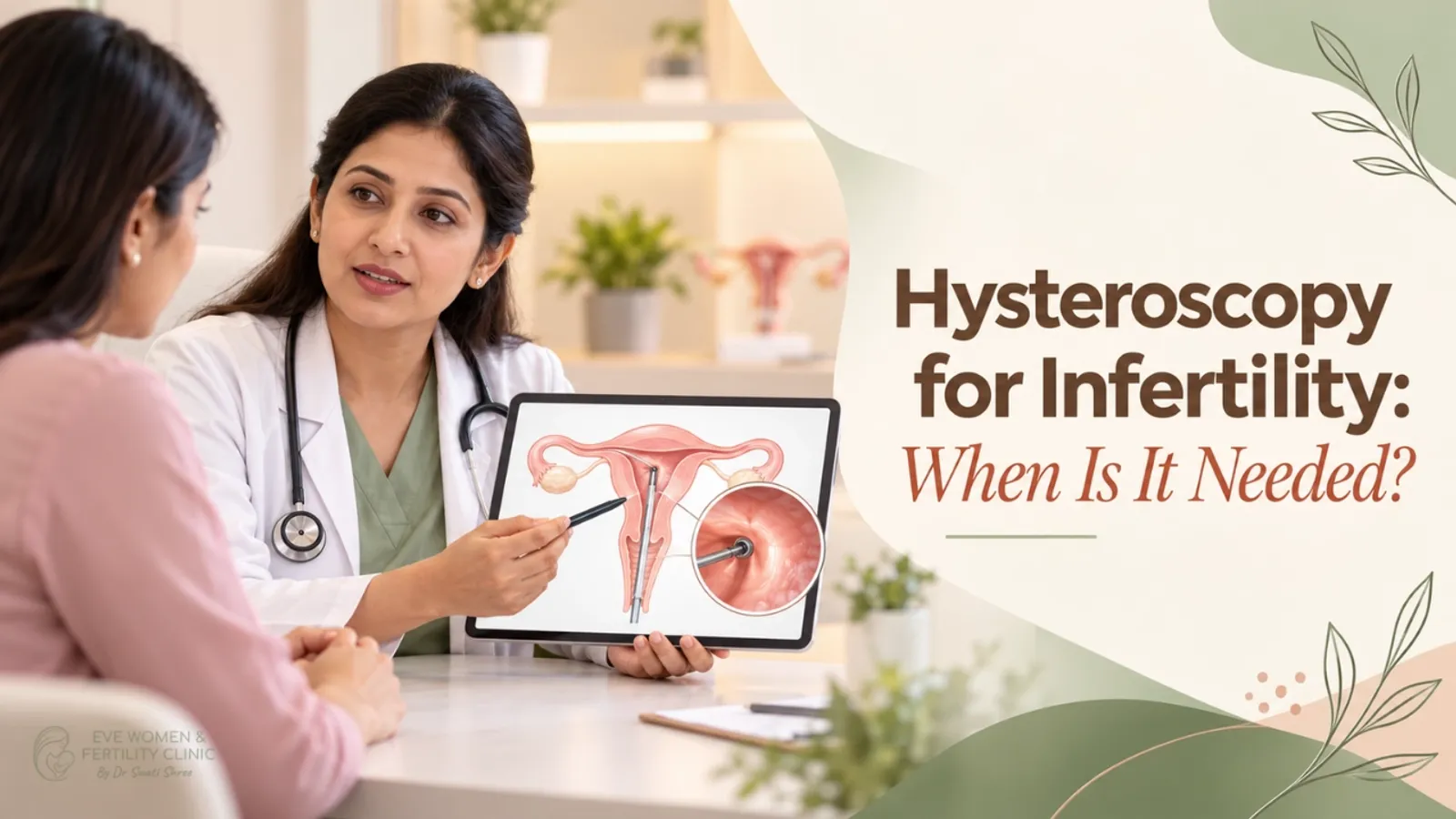
Hysteroscopy is a procedure in which a thin telescope with a camera is passed through the cervix to look inside the womb. It allows doctors to see and often treat problems such as polyps, fibroids, scar tissue and a uterine septum that can affect fertility and implantation.
This article is part of our recurrent miscarriage guide.
Why does the uterine cavity matter?
The inside of the womb is where the embryo implants. Anything that distorts or disturbs the cavity, such as polyps, submucosal fibroids, adhesions or a septum, can reduce the chance of implantation or increase the risk of miscarriage. Finding and correcting these problems can help.
When is it recommended?
Your fertility specialist may suggest hysteroscopy if you have abnormal findings on ultrasound or HSG, repeated IVF failures, recurrent miscarriage, heavy or irregular bleeding, suspected scar tissue after previous surgery or infection, or before certain fertility treatments. It is not required for everyone.
What can hysteroscopy find and treat?
Polyps
Soft growths from the lining that can be removed.
Submucosal fibroids
Growths that protrude into the cavity and can be resected through the hysteroscope.
Intrauterine adhesions
Scar tissue that can be divided, a condition sometimes called Asherman syndrome.
Uterine septum
A wall of tissue dividing the cavity, which can be removed.
Other findings
Endometrial changes or retained tissue after a miscarriage or delivery.
How is it done?
Diagnostic hysteroscopy is often done in a clinic or day-care setting with little or no anaesthesia. Operative hysteroscopy is usually done under sedation or anaesthesia. A fluid or gas expands the cavity so the camera can view the walls. The procedure typically takes from a few minutes to under an hour, depending on what is done.
What is recovery like?
Most women go home the same day. Mild cramping, spotting or watery discharge for a few days is common. Your doctor will advise when to resume intercourse and when to try conceiving, which is often within the next cycle or two, depending on the procedure.
What are the risks?
Hysteroscopy is generally safe. Rare risks include infection, bleeding, uterine perforation and fluid overload with operative procedures. Report fever, severe pain or heavy bleeding promptly.
Key Takeaways
- Hysteroscopy looks inside the womb with a camera.
- It can diagnose and treat cavity problems.
- It may help after repeated implantation failure or miscarriage.
- Recovery is usually quick.
- Serious complications are rare.
Final Thoughts
A healthy uterine cavity is a foundation for pregnancy. If your tests suggest a problem, hysteroscopy offers clarity and often treatment. Dr. Swati Shree at EVE Women and Fertility Clinic in Bengaluru provides assessment and fertility-focused care.
FAQs
Is hysteroscopy painful?
Diagnostic hysteroscopy may cause mild to moderate cramping, and many women tolerate it well in a clinic. Operative procedures are usually done under sedation or anaesthesia, so you feel little during the procedure. It is usually done under sedation or short anaesthesia, so you feel nothing during it. Mild cramping and spotting for a day or two afterward is common and settles quickly.
Does hysteroscopy improve fertility?
Removing polyps, fibroids that distort the cavity, scar tissue or a septum can improve the uterine environment and may improve the chance of implantation in selected women. It does not help everyone. When it finds and removes a problem such as a polyp, small fibroid, septum or scar tissue, yes. As a routine step with a normal cavity it adds little, which is why it is used selectively.
When can I try to conceive after hysteroscopy?
Many women can try in the next cycle or after a short interval, depending on what was done. Your doctor will give specific advice, particularly after removing fibroids or scar tissue. Often after one normal period, though removing a septum or larger lesion may need a few months for the lining to heal. Your surgeon gives a clear timeframe for your procedure.
Do I need hysteroscopy before IVF?
Not for everyone. It may be advised if scans suggest cavity problems, after repeated implantation failure or when otherwise indicated. Your specialist will decide. Not routinely. It is advised when scans suggest a polyp, fibroid, septum or scarring, or after repeated failed transfers with good embryos. A normal cavity does not need routine scoping.
What are the risks of hysteroscopy?
Risks are uncommon and include infection, bleeding and, rarely, uterine perforation or fluid overload. Seek help for fever, heavy bleeding or severe pain after the procedure. It is generally safe; uncommon risks include infection, bleeding, or rarely a small hole in the uterine wall. These are uncommon, and your specialist explains them before the procedure.