
ICSI for Male Infertility: When Is It Recommended?
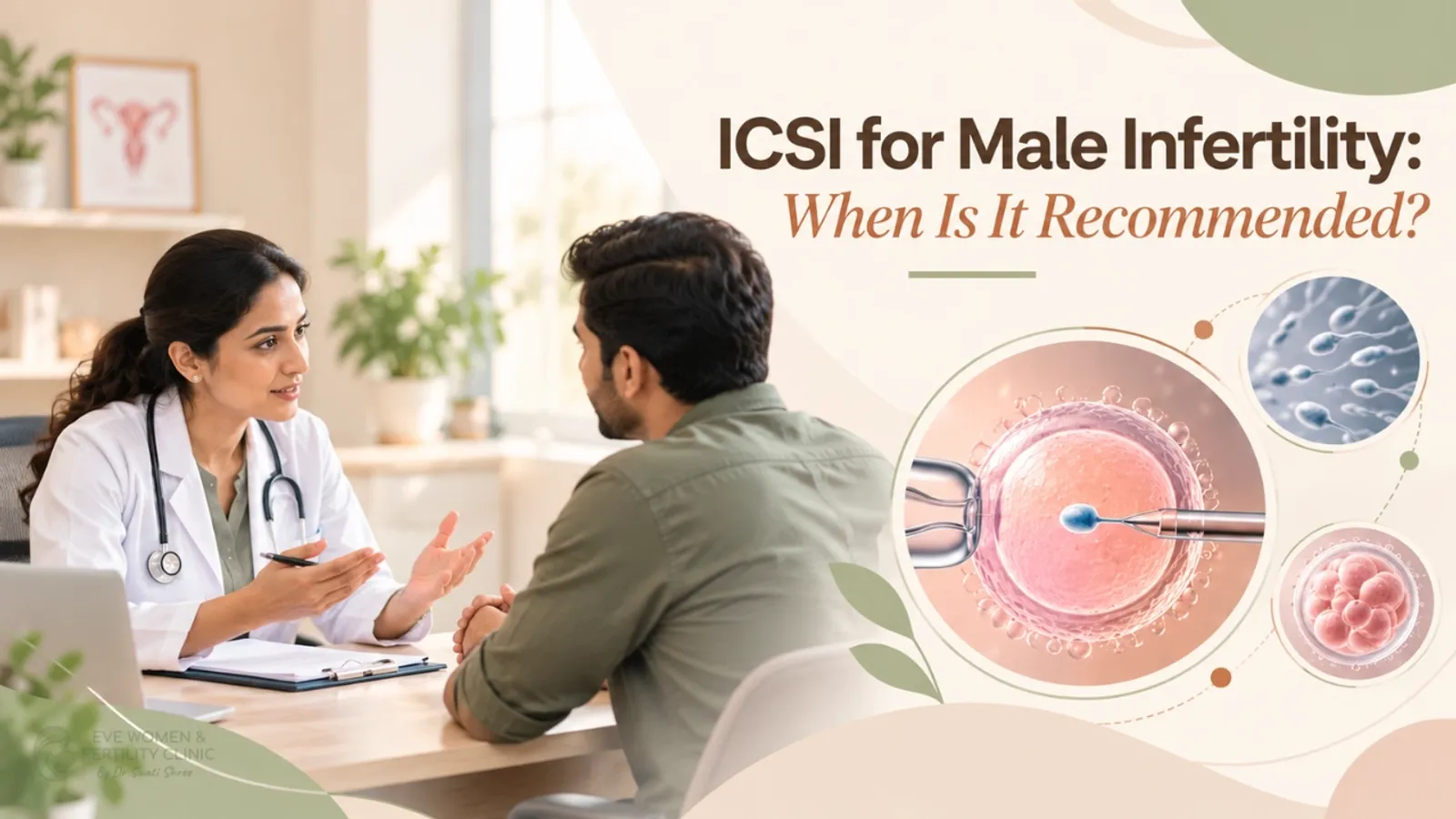
Quick answer: ICSI may be recommended for severe low sperm count, poor motility or abnormal morphology, azoospermia with surgical sperm retrieval, high sperm DNA damage in some cases, previous failed fertilisation with standard IVF and when using frozen sperm of limited quality. It is part of IVF, not a separate treatment.
ICSI, or intracytoplasmic sperm injection, is a lab technique used during IVF where an embryologist injects a single sperm directly into each mature egg. It is mainly recommended when sperm count, movement or shape are significantly reduced, when sperm are retrieved surgically, or when fertilisation failed in a previous IVF cycle. ICSI helps sperm and egg meet but does not fix every cause of infertility.
This article is part of our male infertility guide.
How is ICSI different from standard IVF?
Standard IVF
Eggs and many sperm are placed together in a dish. Sperm must swim to the egg and enter it on their own.
ICSI
An embryologist selects one sperm and injects it directly into the egg using a very fine needle under a microscope. This bypasses the need for the sperm to swim and penetrate the egg.
All other IVF steps, such as ovarian stimulation, egg collection, embryo culture and transfer, stay the same.
When is ICSI recommended?
Severe male factor
Very low sperm count, poor motility or very abnormal shape may prevent normal fertilisation.
Azoospermia
When there are no sperm in the semen, sperm may be retrieved from the testis or epididymis. These sperm usually need ICSI.
Previous fertilisation failure
If eggs did not fertilise in a past IVF cycle, ICSI may be used next time.
Frozen or limited sperm samples
When sperm numbers are limited, such as after cancer treatment, ICSI makes the best use of each sperm.
Some other situations
ICSI may be considered for testing embryos genetically or when few eggs are available. Your specialist will explain if this applies.
What ICSI cannot do
- It cannot improve egg quality
- It cannot fully correct genetic problems in sperm
- It does not guarantee fertilisation or pregnancy
- It does not overcome uterine problems
Is ICSI Safe?
ICSI has been widely used for decades. Most babies born after ICSI are healthy. Some studies suggest a small increase in certain risks, which may relate to the underlying male infertility rather than the technique. Genetic counselling may be offered in selected cases, such as severe male factor with genetic causes.
How is sperm selected?
Embryologists choose sperm with good movement and shape under high magnification. Some centres use advanced selection methods, though their benefit varies.
Key Takeaways
- ICSI injects one sperm into each egg during IVF.
- It is mainly used for significant male infertility.
- It is essential when sperm are surgically retrieved.
- It may help after previous fertilisation failure.
- It does not fix egg or uterine problems.
Final Thoughts
ICSI has given many couples with male factor infertility a real chance of parenthood. The decision to use it should be based on test results and history, not routine use for everyone. For a clear discussion of your options, you can consult Dr. Swati Shree, a fertility specialist at Eve Women & Fertility Clinic in Bengaluru.
FAQs
Is ICSI the same as IVF?
ICSI is a technique used within IVF. The main difference is how fertilisation happens. In standard IVF, sperm fertilise the egg on their own. In ICSI, a single sperm is injected directly into each egg. ICSI is a step inside an IVF cycle, not a different treatment. Standard IVF lets sperm and egg meet in a dish; ICSI injects one chosen sperm directly into each egg, mainly for male factor.
Does ICSI improve pregnancy chances?
ICSI improves fertilisation when there is significant male infertility. It does not usually improve pregnancy chances when sperm are normal. Pregnancy still depends on egg quality, embryo development and the uterus. When sperm is the problem, yes, it markedly improves fertilisation. For couples without male factor it adds little, so clinics reserve it for the cases where it genuinely helps.
Is ICSI painful for the woman?
The ICSI step happens in the lab, so it causes no extra pain. The woman goes through the same IVF steps, including stimulation and egg collection, which is done under sedation. The process is identical to IVF for her: injections, monitoring and egg collection under sedation. ICSI happens entirely in the lab afterward, so she feels no difference at all.
Can ICSI be used with surgically retrieved sperm?
Yes. Sperm collected from the testis or epididymis are usually few and less mobile, so ICSI is the standard way to use them for fertilisation. Yes, and that is one of its main uses. Sperm from TESA or PESA are too few and too immature for standard IVF, so injecting them directly into the egg is how such samples are used.
Are babies born through ICSI healthy?
Most babies born through ICSI are healthy. Some small increased risks have been reported, which may be linked to the father's infertility itself. Your doctor can discuss genetic counselling if needed. Large studies show outcomes broadly similar to standard IVF, with a small debated increase in certain anomalies linked more to the infertility itself than the technique. Your doctor will discuss this openly.
Will ICSI fix poor sperm DNA quality?
ICSI helps sperm enter the egg, but it does not repair damaged DNA. In some cases, doctors may suggest lifestyle changes, treatment of causes or using testicular sperm. Results vary. Not necessarily. ICSI gets the sperm into the egg but cannot repair DNA fragmentation. High fragmentation may need lifestyle change, treatment of causes, or testicular sperm in selected cases.