
IVF Process Step by Step: Consultation to Embryo Transfer
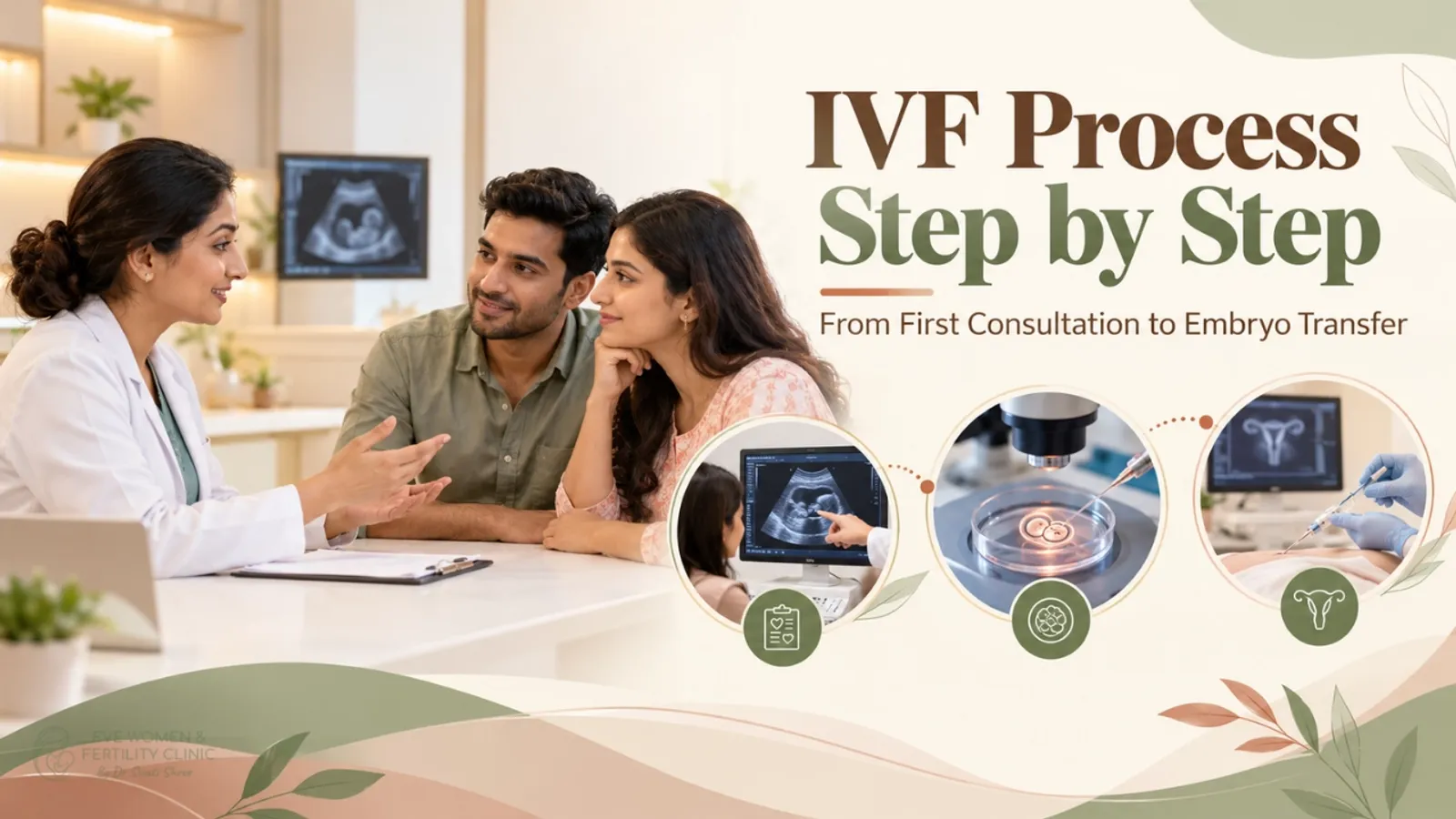
Quick answer: A standard IVF cycle moves through evaluation, ovarian stimulation, egg collection, embryo culture and transfer. Stimulation usually lasts 8 to 14 days, and egg collection takes place about 34 to 36 hours after the trigger injection. For a fresh cycle, plan on roughly four to six weeks from the first injection to the pregnancy blood test.
IVF, or in vitro fertilisation, is a treatment in which eggs are collected from the ovaries and fertilised with sperm in a laboratory. The resulting embryo is then placed in the uterus. If your doctor has just mentioned IVF, the steps below show what lies ahead, from the first visit to the pregnancy test.
This article is part of our IVF treatment guide.
Step 1: The first consultation and tests
The first visit is mostly a conversation. The doctor asks about your periods, past treatment, surgeries and infections, and asks your partner similar questions. Bring any reports you already have. An AMH result, ultrasound films, hormone levels, a semen analysis and notes from earlier IUI or IVF cycles all shape the plan. Sometimes the results point to a simpler option, such as ovulation tablets or IUI, before IVF is considered.
The workup typically covers AMH, an antral follicle count scan, day 2 or 3 hormone levels, thyroid and prolactin tests, a transvaginal ultrasound and a semen analysis. Both partners also complete infection screening, because eggs, sperm and embryos need safe handling in the lab.
Step 2: Planning the cycle
Once the reports are in, the doctor picks a stimulation protocol, decides whether ICSI is needed and discusses fresh versus frozen transfer. This is a good moment to ask for a written cost estimate and timeline, so you can arrange leave and family support early. Consent forms are signed before treatment starts, as required under India's Assisted Reproductive Technology (Regulation) Act, 2021.
Step 3: Stimulation and monitoring
Over 8 to 14 days, you inject a hormone medicine every day, usually into the skin of the belly. Scans every two or three days measure the follicles, fluid-filled sacs that can each hold an egg. Their growth guides any change in dose. Bloating, tender breasts and mood swings are common during this phase, and they settle once the injections stop.
Step 4: Trigger injection and egg collection
The trigger injection helps the eggs complete their final stage of maturing. Its timing is strict, so set an alarm for the exact hour your clinic gives you. Collection follows 34 to 36 hours later. Under sedation, a fine needle guided by ultrasound draws fluid from each follicle. The procedure takes 15 to 30 minutes, and most women go home the same day with cramping that eases within a day or two.
Collection and IVF laboratory work take place at partner centres, Apollo Fertility and Motherhood Fertility, where Dr. Swati Shree is a visiting consultant.
Step 5: Fertilisation and embryo culture
Your partner gives a semen sample that same day. Eggs are fertilised by standard IVF or by ICSI, which places a single sperm into each mature egg. The embryologist then tracks development for three to five days. Embryos stop growing at different points, so the number often falls each day. A drop does not mean something went wrong, and your team will keep you updated at every stage.
Step 6: Embryo transfer
A fresh transfer happens 3 to 5 days after collection, within the same cycle. A frozen transfer uses embryos that were vitrified (rapidly frozen) and is planned for a later cycle. Freezing is often chosen when the risk of ovarian hyperstimulation is high or the uterine lining needs more time.
The transfer itself is brief and usually needs no anaesthesia. Many women compare it to a Pap smear. Under ultrasound, a thin catheter carries the embryo through the cervix into the uterus. Transferring one good-quality embryo at a time keeps the chance of twins low, and most clinics now favour this approach.
| Stage | Typical timing | What you do |
|---|---|---|
| Consultation and tests | 2 to 4 weeks | Bring reports and complete blood and semen tests |
| Stimulation | 8 to 14 days | Daily injections and scans every 2 to 3 days |
| Trigger to egg collection | 34 to 36 hours | Take the injection at the exact time given |
| Embryo culture | 3 to 5 days | Wait for the lab update |
| Transfer to pregnancy test | 9 to 14 days | Continue progesterone and avoid early home tests |
The two-week wait
For many couples, this is the hardest part of the process. Progesterone usually continues through it. The beta hCG blood test is done 9 to 14 days after transfer. Bed rest does not improve implantation, so light daily activity, including office work, is fine.
When should you get urgent medical help?
Contact your doctor promptly, or go to the nearest emergency department, if you notice:
- Severe or worsening belly pain, or rapid bloating, after injections or egg collection
- Breathlessness, or much less urine than usual
- One-sided pelvic pain, shoulder tip pain, fainting or heavy bleeding in early pregnancy
- Fever after a procedure
The first two can point to ovarian hyperstimulation. The third can point to an ectopic pregnancy.
When should you see a fertility specialist?
Most guidelines suggest an evaluation after a year of trying, or after six months from age 35. If you already know about PCOS, endometriosis, tube problems or a sperm issue, there is no need to wait that long.
Key Takeaways
- Each step builds on the one before, so the tests done early shape the whole cycle.
- A fresh cycle usually runs four to six weeks, from the first injection to the blood test.
- Trigger timing matters more than most people expect.
- Transferring one embryo at a time lowers the risk of twins.
- A home test taken too early can mislead you, so wait for the blood test.
Final Thoughts
- Medical Disclaimer
- This article is for educational purposes only and does not replace professional medical advice. Fertility treatment outcomes vary from person to person. Please consult a qualified doctor for diagnosis and treatment.
Nobody understands every term on day one, and you don't have to. Your doctor will explain each stage as you reach it, and a written list of questions makes those visits far more useful. If you would like to know whether IVF suits your situation, you can book a fertility consultation with Dr. Swati Shree at EVE Women and Fertility Clinic, Gunjur, Bangalore.
FAQs
How long does the IVF process take from the first consultation to embryo transfer?
Tests and planning often take two to four weeks, sometimes longer. Stimulation then runs for 8 to 14 days, and collection happens about 34 to 36 hours after the trigger shot. A fresh transfer follows 3 to 5 days later. Altogether, a fresh cycle takes around four to six weeks from the first injection to the pregnancy test. Frozen transfers take longer because they happen in a later cycle.
Do I have to start IVF right after the first consultation?
It depends on your results. Your doctor reviews the tests first and may suggest ovulation tablets or IUI, depending on your diagnosis, age and how long you have been trying. Some couples go directly to IVF, for instance when both tubes are blocked or sperm problems are severe. Ask for a written plan and cost estimate before any medicine is started.
Does egg collection hurt?
The procedure is done under sedation or light anaesthesia, so you won't feel it. Cramping and light spotting for a day or two are common afterwards. Ask your clinic which pain relief is safe for you. Heavy bleeding, fever or severe belly pain after collection should be assessed promptly.
Why are there fewer embryos than eggs collected?
Not every follicle contains an egg, and some collected eggs are immature and cannot be fertilised. After fertilisation, some embryos stop dividing during the three to five days in culture. Early embryo loss also happens in natural conception. Your embryologist will tell you which embryos are developing well enough for transfer or freezing.
Can I take a home pregnancy test after embryo transfer?
It is better to wait for the blood test, done 9 to 14 days after transfer. The trigger injection can leave hormone traces that cause a false positive early on, and testing too soon can also miss a pregnancy. If you notice bleeding or symptoms in the meantime, call your doctor rather than testing again and again. Keep taking progesterone until your team advises otherwise.
Where can I get an IVF evaluation in East Bangalore?
Dr. Swati Shree consults at EVE Women and Fertility Clinic in Gunjur, Bangalore, which is within easy reach of Varthur, Whitefield, Sarjapur Road and Bellandur. Where IVF is recommended, she guides treatment through partner fertility centres in Bangalore, including Apollo Fertility and Motherhood Fertility, where she is a visiting consultant. A consultation lets her build the plan around your own reports.