
Letrozole for PCOS and How It Can Help You Conceive
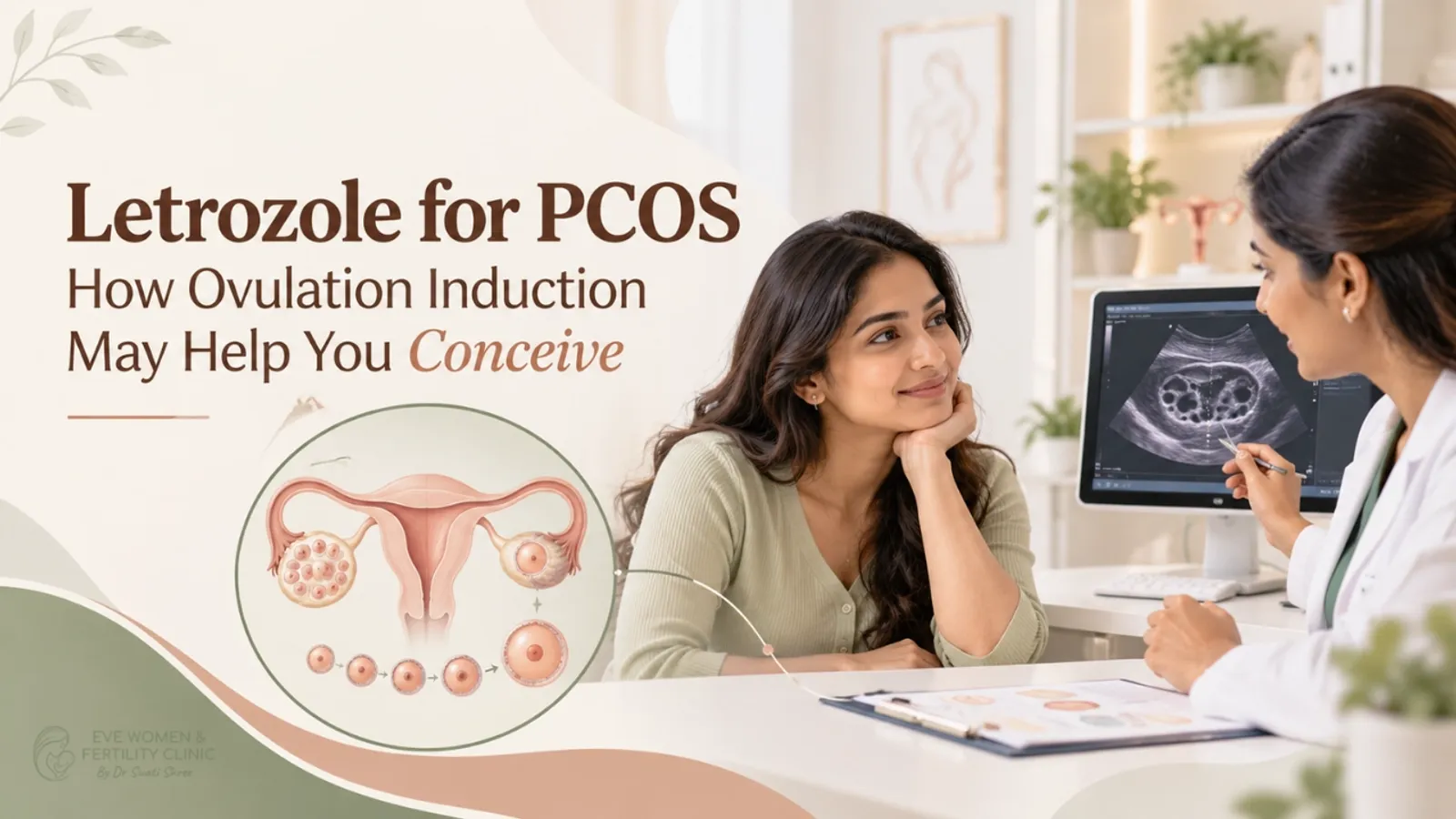
Letrozole is usually the first tablet a fertility specialist considers when PCOS is the main reason ovulation is absent or unpredictable. It belongs to a class of medicines called aromatase inhibitors. Over a short course, it lowers estrogen signalling in the brain, which prompts the pituitary gland to release more follicle stimulating hormone (FSH). That rise in FSH can help a follicle in the ovary mature and release an egg.
This article is part of our PCOS and fertility guide.
What is Letrozole used for in PCOS?
Letrozole is the recommended first-line medicine for ovulation induction in women with PCOS who do not ovulate regularly and have no other significant fertility factor. The 2023 international evidence-based PCOS guideline supports this position. It is a prescription medicine, and it works best when a doctor monitors each cycle. It can make ovulation more predictable, but it cannot promise pregnancy.
Why is Letrozole often chosen before other options?
Clomiphene citrate was the default first tablet for years. Studies in PCOS have generally found that letrozole achieves similar or better ovulation and pregnancy results, with a lower chance of twins. That combination is the main reason it moved to the front of the treatment ladder.
Who is a good candidate?
Letrozole makes most sense when periods are irregular or absent, ovulation tests point to a problem, and the fallopian tubes and semen analysis look reassuring. Your age, body weight and metabolic health also shape the plan.
What does a Letrozole cycle involve?
Most protocols begin early in the cycle and run for a set number of days. Serial ultrasound scans, known as follicular studies, measure how a follicle is growing. Once the follicle is mature, the team advises timed intercourse or an IUI. A pregnancy test follows at the advised time.
The dose and duration are individual. Please do not change them, and do not restart a missed course, without speaking to your doctor.
What side effects can happen?
Headache, hot flushes, fatigue, mood changes and mild lower abdominal discomfort are the most commonly reported effects. They usually settle. Report anything that persists or feels unusual.
What are the limitations?
Ovulation medicines can stimulate more than one follicle, which can lead to twins. The risk is lower with letrozole than with older options, but it is not zero. Severe ovarian overstimulation is uncommon with oral treatment, and monitoring is how it gets caught early.
A cycle without pregnancy is very common. It rarely means the door has closed. Doctors often refine the plan after reviewing how the ovaries responded.
Is Letrozole used with IUI?
When ovulation is confirmed and semen parameters are suitable, letrozole is often paired with IUI. Prepared sperm is placed into the uterus close to ovulation. Fertilisation still takes place inside the reproductive tract.
Common myths about Letrozole
"Letrozole is an injection." It is a tablet.
"Letrozole ensures twins." It does not. Twins remain a possibility, and monitoring helps manage that risk.
"One unsuccessful cycle means treatment has ended." Many couples conceive once the plan has been refined.
How do lifestyle and emotions fit in?
Adequate sleep, regular movement and balanced meals support insulin sensitivity and hormonal balance, both relevant in PCOS. Rice, dal, roti and sweets can remain part of a balanced diet when portions are sensible. Waiting out each cycle is emotionally draining, and counselling eases that strain for many couples. A delayed pregnancy affects both partners, and neither should carry the blame alone.
When should you see a fertility specialist?
Speak to a specialist before starting letrozole, particularly if periods are very irregular or absent. Evaluation is generally advised after 12 months of trying for women under 35, and after 6 months from age 35.
When is urgent care needed?
Seek prompt medical care for severe abdominal or pelvic pain, bloating with breathlessness, markedly reduced urine output, heavy bleeding, fainting, one-sided pelvic pain in early pregnancy, or fever after a procedure.
Key Takeaways
- Letrozole is the recommended first medicine for many women with PCOS and irregular ovulation.
- It is a prescription tablet that needs monitoring.
- Follicular scans guide the timing of intercourse or IUI.
- Pregnancy cannot be guaranteed, and some cycles will not work.
- Both partners are usually assessed before a plan is finalised.
Final Thoughts
- Medical Disclaimer
- This article is for education only and does not replace professional medical advice. Treatment outcomes differ from person to person. Please consult a qualified doctor for diagnosis and treatment.
For many women with PCOS, letrozole offers a practical, well-studied route to ovulation. Whether it suits you depends on your cycle pattern, test results and overall health. If you want to talk it through, Dr. Swati Shree at EVE Women and Fertility Clinic in Gunjur, Bangalore can review your history and outline the options.
FAQs
Is letrozole given as an injection?
No. Letrozole is an oral tablet. Your doctor sets the dose and number of days based on your cycle history, blood tests and ultrasound findings. Injections enter the picture only in certain plans, usually when the ovary does not respond well to tablets. Do not start letrozole without a prescription, even if a friend or an online source suggests it.
How long before you know whether letrozole has worked?
The response is usually judged across one or more cycles. Follicular scans and symptoms show whether ovulation occurred, and a pregnancy test is taken at the recommended time, typically about two weeks after ovulation. A cycle without pregnancy is common and does not signal permanent failure. Your doctor will review what happened before recommending the next step.
Is letrozole with IUI available in Bangalore?
Yes, for suitable couples. It is often used alongside IUI when ovulation can be induced and tracked on scans, and when semen quality and tubal status look appropriate. EVE Women and Fertility Clinic in Gunjur offers ovulation induction, follicle monitoring and IUI within its ART Level 1 scope. Patients from East Bangalore can book a consultation with Dr. Swati Shree to discuss whether this suits them.
What happens if letrozole does not lead to pregnancy?
The next step depends on what the cycles showed. Options can include adjusting the dosing schedule, adding closer monitoring, moving to IUI, or checking other factors such as sperm quality and the fallopian tubes. IVF is usually discussed when ovulation treatments have not worked or another factor makes it more appropriate. Advanced IVF procedures are carried out through EVE's partner fertility centres.
Can letrozole be used for irregular periods without PCOS?
It can be considered, but only once the cause is clear. Irregular periods may stem from thyroid disease, raised prolactin or other hormonal conditions, and these need investigation first. If a specialist confirms that ovulation is the problem, letrozole may be an option. The decision rests on your full clinical picture, not on your period pattern alone.