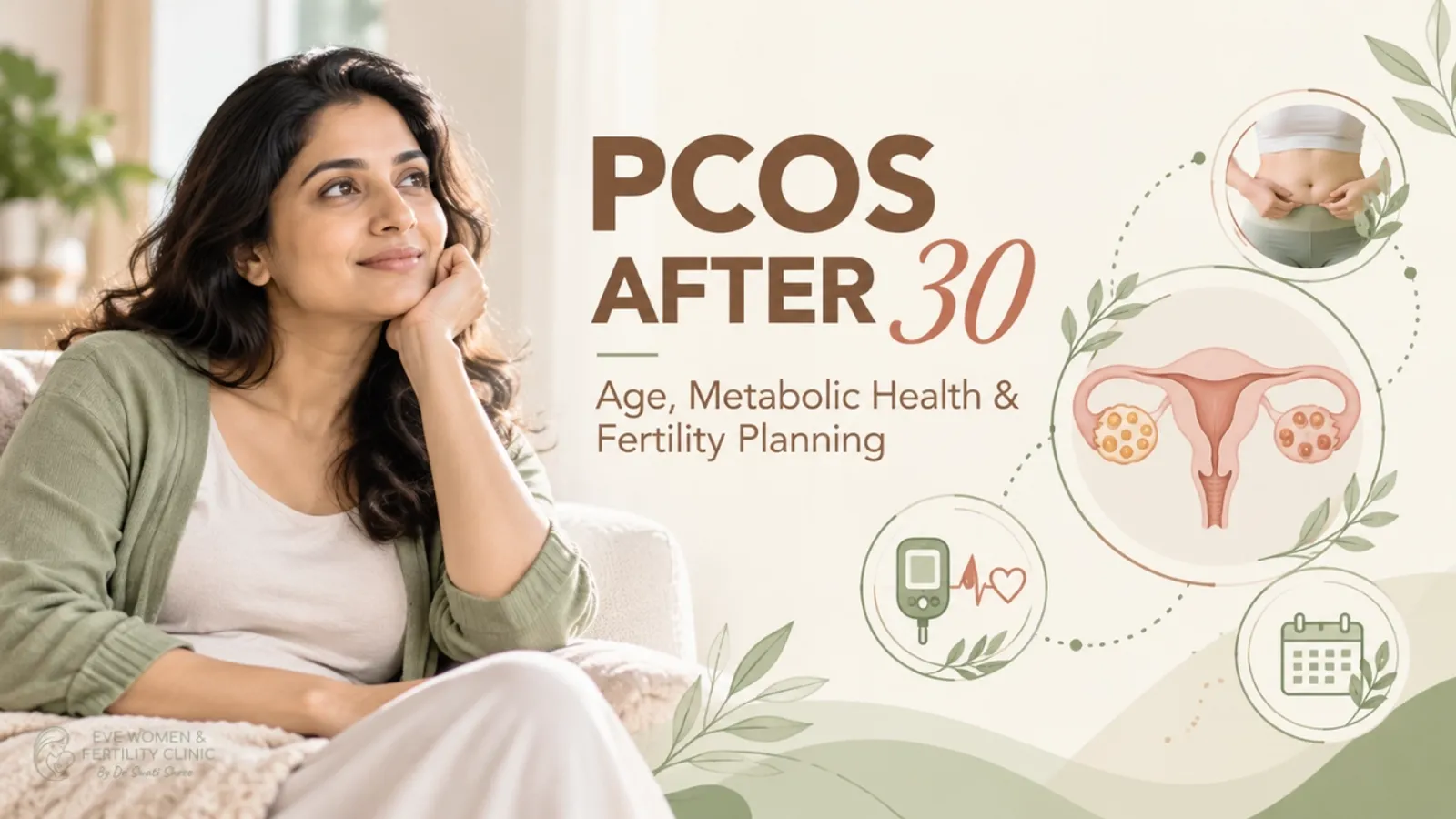
PCOS After 30: Age, Metabolic Health and Fertility Planning
Quick answer: Can you still get pregnant with PCOS after 30? Yes, many women with PCOS in their 30s conceive naturally or with treatment. Age narrows the window mainly because irregular cycles hide fertile days, and egg quality keeps shifting in the background. For that reason, many specialists do not wait the full 12 months of trying when periods are irregular.
Most women with PCOS can still conceive after 30. The condition itself does not change at that age, but the planning around it does. Ovulation often stays irregular, egg numbers decline gradually, and blood sugar or weight can affect both conception and the health of a pregnancy. Knowing what to check, and when to check it, saves months.
This article is part of our PCOS and fertility guide.
Why does age matter more with PCOS?
Egg supply declines with age in every woman. With PCOS, the bigger problem is that cycles are hard to read. If ovulation happens only now and then, fertile days pass without anyone noticing. Those unnoticed months add up, and they add up faster after 30.
How does metabolic health affect fertility?
Insulin resistance is common in PCOS. The body produces more insulin to keep blood sugar in range, and that extra insulin can push the ovaries to make more androgens. Higher androgen levels can disturb ovulation.
Metabolic health also shapes the pregnancy itself. Women with PCOS carry a higher risk of gestational diabetes and high blood pressure, so these are worth checking before conception rather than after. A pre-pregnancy review usually includes:
- Fasting blood sugar or HbA1c
- Lipid profile (cholesterol and triglycerides)
- Thyroid function (TSH)
- Blood pressure and body weight
Modest, steady weight loss helps some women ovulate more regularly. The aim is a healthier cycle, not a particular number on the scale.
Which fertility tests matter after 30?
AMH and antral follicle count estimate ovarian reserve, meaning the number of eggs remaining. They say little about egg quality or the likelihood of natural conception. AMH tends to run high in PCOS, which makes the number easy to misread. A high result does not guarantee easy conception, and a lower one does not close the door.
| Area | Why it matters after 30 | Common next step |
|---|---|---|
| Ovulation pattern | Missed fertile windows add months | Cycle review, hormone tests, ultrasound |
| Metabolic health | Affects ovulation and pregnancy risk | Glucose, HbA1c, lipid and thyroid tests |
| Ovarian reserve | Helps plan timing and treatment | AMH and antral follicle count |
| Semen analysis | Male factors contribute to many cases | Partner's semen test |
| Fallopian tubes | Needed before IUI or IVF decisions | Tubal assessment if advised |
When should you start fertility planning?
There is no single age cutoff. A specialist looks at your age, cycle pattern, ovarian reserve, tubal status and your partner's semen report as one picture. Many couples lose time waiting for periods to become regular before anyone checks anything. Starting early keeps more options available.
What treatment options are usually discussed?
The assessment shapes the plan. When ovulation is irregular and other tests are normal, ovulation induction with oral medicines is often the first step. Follicular monitoring then helps time intercourse or IUI. IVF may come up sooner if age, ovarian reserve or another factor makes it the better fit. Dr. Swati Shree evaluates patients at EVE and guides IVF treatment through her partner fertility centres in Bangalore.
Can everyday habits help?
They can, and the changes do not need to be dramatic. Rice, dal and roti can stay on the plate. Smaller portions of refined carbohydrates, more protein and fibre at each meal, a short walk after eating, regular sleep and quitting smoking all support metabolic health. Planning a pregnancy is also stressful, and talking to someone about it is a reasonable step.
When should you seek urgent care?
- Get medical help quickly if you have
- Severe or one-sided lower abdominal pain, dizziness or fainting, or bleeding in early pregnancy, which may point to an ectopic pregnancy
- Heavy bleeding during pregnancy
- Severe bloating, breathlessness or reduced urine after fertility injections, which may point to ovarian hyperstimulation
- Fever after any procedure
If you have not had a period for three months or more, book a review even if you feel well.
Key Takeaways
- Natural conception or pregnancy with treatment remains possible after 30 with PCOS.
- Irregular ovulation and age both shorten the time available, so early assessment helps.
- Metabolic health affects ovulation and pregnancy safety, and it can be checked before conception.
- AMH reflects ovarian reserve, not egg quality or the chance of pregnancy on its own.
- There is no universal age cutoff, so the plan should follow a full assessment.
Final Thoughts
- Medical Disclaimer
- This article is for educational purposes only and does not replace professional medical advice. Fertility treatment outcomes vary from person to person. Please consult a qualified doctor for diagnosis and treatment.
Planning after 30 with PCOS asks for clarity more than urgency. Once you know where your ovulation, metabolic health and ovarian reserve stand, the next step becomes much easier to choose. If you are planning a pregnancy, a consultation with Dr. Swati Shree at EVE Women and Fertility Clinic in Gunjur, Bangalore, is a sensible place to begin.
FAQs
Is it too late to try for a baby with PCOS at 30 or older?
Not necessarily. Age matters, but many women over 30 with PCOS do conceive. What matters more is how far along your planning is. Early checks of ovulation, metabolic health, your partner's semen analysis and ovarian reserve help you move forward without guesswork. There is no universal cutoff, so your timeline depends on your own picture.
Should I get an AMH test if I have PCOS?
AMH is often part of the assessment in PCOS, but the result needs careful reading. PCOS commonly raises AMH, so a high value does not mean egg quality is good, and a lower value does not rule out pregnancy. Your doctor will read AMH alongside your cycle pattern, ultrasound findings and your partner's semen report before suggesting a next step.
Can PCOS and diabetes affect pregnancy?
They can. Women with PCOS have a higher risk of gestational diabetes and high blood pressure during pregnancy. Screening blood sugar and blood pressure before conception lets your doctor plan ahead, and good metabolic control before and during pregnancy supports a healthier outcome. It is worth raising this early.
Do I need IVF straight away after 30 with PCOS?
Usually not. Many women with PCOS begin with ovulation induction and monitoring, and IUI may be considered in suitable cases. IVF comes into the picture when other factors make it more appropriate, such as tubal problems, a significant semen issue, age-related concerns or earlier treatment that did not lead to pregnancy.
Where can I get a PCOS fertility assessment in Bangalore?
EVE Women and Fertility Clinic in Gunjur, Bangalore, offers fertility consultation, ovulation induction, follicle monitoring and IUI under Dr. Swati Shree. Bring previous blood test reports and ultrasound records to your first visit. For IVF, she guides treatment through partner fertility centres in Bangalore.