
How Long Does IVF Take? The Real Timeline
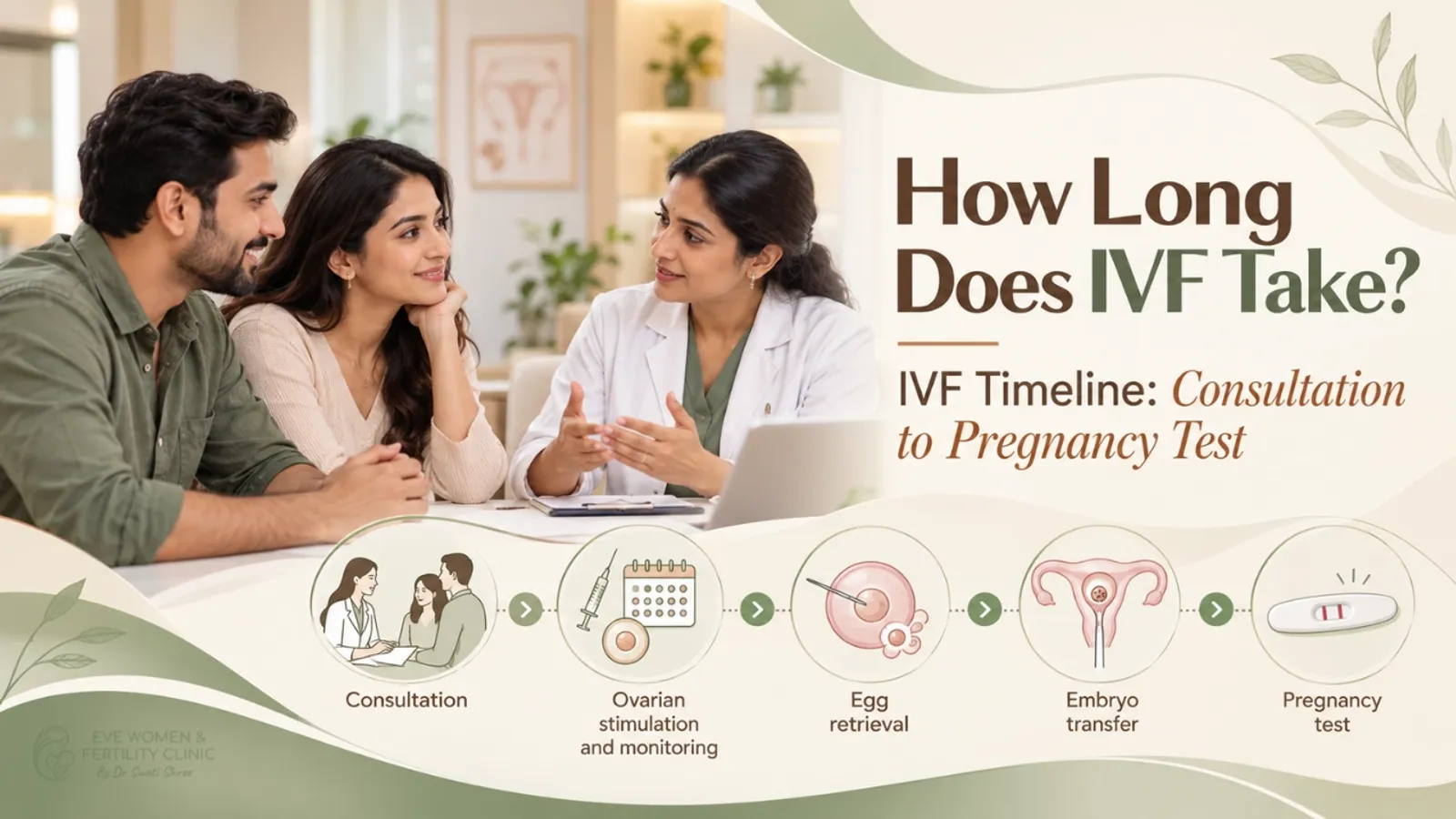
Quick answer: A fresh IVF cycle typically takes four to six weeks from the first injection to the pregnancy test. Planning adds a few more weeks at the start, and a frozen embryo transfer generally adds at least a month.
Most IVF cycles run about four to six weeks, from the first hormone injection to the pregnancy blood test. If you count the tests and planning that come beforehand, the whole process often stretches to six to ten weeks. Your own timing depends on how your ovaries respond, whether embryos go back fresh or frozen, and what the scans reveal along the way.
This article is part of our IVF treatment guide.
Why planning comes first
Stimulation doesn't start until the team has the full picture. Expect an AMH blood test, hormone levels from early in the cycle, an antral follicle scan, a semen analysis, and infection screening for both partners. Several of these must be done on specific cycle days, so the start date is often fixed a few weeks ahead.
What does the timeline look like, stage by stage?
| Stage | Typical timing | What to expect |
|---|---|---|
| Consultation and tests | 2 to 4 weeks | Blood work, scans, semen analysis and a treatment plan |
| Ovarian stimulation | 8 to 14 days | Daily injections, with scans every 2 to 3 days |
| Trigger injection | Final dose | Helps the eggs complete maturation |
| Egg collection | 34 to 36 hours after trigger | Brief procedure under sedation |
| Fertilisation and embryo growth | 3 to 5 days | Embryos monitored in the lab |
| Embryo transfer | 3 to 5 days after collection (fresh) | Quick, usually without anaesthesia |
| Pregnancy blood test | 9 to 14 days after transfer | Beta hCG test |
How long do the injections take?
Stimulation runs 8 to 14 days. Scans every two or three days show how the follicles are growing, and the dose changes based on what they find. Some women respond slowly and need a few extra days. That gives the doctor more to work with, and it doesn't mean the cycle is lost. The trigger shot has to be taken at the exact hour your clinic gives you, since egg collection follows 34 to 36 hours later.
What happens between collection and the test?
Eggs are fertilised the same day, through standard IVF or ICSI. The embryos are then tracked for three to five days. Many clinics prefer to transfer a blastocyst, an embryo that reaches day 5 or 6. Not every embryo keeps developing, so numbers often drop along the way. Most clinics will call you with updates as they come in.
Transfer is brief, and most women describe it as similar to a Pap smear. Progesterone support continues afterwards. The beta hCG blood test is usually booked 9 to 14 days after transfer.
Home tests can mislead during this window. The trigger shot leaves a hormone similar to hCG in the body for several days, so a test taken too soon may show a positive result with no pregnancy behind it.
Why do some cycles take longer?
- A slow or excessive response to stimulation, which adds injection days
- A pause or cancellation for safety reasons
- Embryos that stop developing before reaching the blastocyst stage
- Freezing all embryos to reduce the risk of ovarian hyperstimulation syndrome (OHSS), with transfer in a later cycle
- A uterine finding, such as a polyp, that is treated before transfer
- A frozen transfer, which needs time to prepare the lining
How can you plan around the timeline?
Scan dates can move at short notice, so it helps to build some flexibility into your work plans. Ask for leave early, especially if your commute across Bangalore is long. Many clinics also expect a companion to take you home after egg collection, since sedation is involved. A written calendar from the first visit makes all of this easier to manage.
When should you seek urgent care?
Call your clinic or doctor without delay if you notice:
- Severe pain in the belly, rapid bloating, breathlessness, or passing very little urine after injections or collection. These can be signs of OHSS.
- Fever after any procedure
- If you are pregnant: pain on one side of the pelvis, shoulder tip pain, fainting or heavy bleeding. These may point to an ectopic pregnancy or a miscarriage.
Key Takeaways
- A fresh cycle usually runs four to six weeks from the first injection to the blood test.
- Tests and planning before treatment can add two to four weeks.
- Frozen transfers generally add a month or more.
- Schedule changes after scans are common and are part of careful monitoring.
Final Thoughts
- Medical Disclaimer
- This article is for educational purposes only and does not replace professional medical advice. Fertility treatment outcomes vary from person to person. Please consult a qualified doctor for diagnosis and treatment.
The wait after transfer is hard for most couples, and feeling drained is understandable. Talking it through with your partner, or with a counsellor, often helps more than trying to stay calm alone. If you are considering IVF, a consultation with Dr. Swati Shree at EVE Women and Fertility Clinic in Gunjur, Bangalore, can show how this timeline applies to your own reports. She can evaluate you at EVE and guide your IVF treatment through her partner fertility centres in Bangalore.
FAQs
How long does IVF take from the first injection to the pregnancy test?
For a fresh cycle, the active treatment window is 8 to 14 days of injections, a trigger shot, egg collection about 34 to 36 hours later, three to five days of embryo growth, and a beta hCG test 9 to 14 days after transfer. Together these stages usually add up to four to six weeks. Your schedule may be shorter or longer depending on how your ovaries respond.
How long does the whole IVF process take from the first consultation?
Counting consultation, blood tests, scans and semen analysis, most couples should set aside six to ten weeks. Occasionally a procedure such as a hysteroscopy comes first, which adds time. Tests that must be repeated on specific cycle days can also shift the start date. A written schedule from the first visit makes it easier to plan leave.
Why does a frozen embryo transfer take longer?
A frozen transfer means the embryos are stored and placed in a later cycle. The lining must be prepared first, either through a natural cycle or with hormone tablets, and that preparation typically adds a month or more. Doctors often suggest this route when the ovaries responded strongly, when OHSS risk is a concern, or when embryo testing is planned.
Is it safe to take a home pregnancy test before the blood test?
Waiting for the scheduled blood test gives the clearest answer. The trigger shot can leave a hormone similar to hCG in the body for several days, so an early home test may read positive without a pregnancy. A test taken too soon can also read negative even when a pregnancy has started. Report any worrying symptoms to your clinic rather than relying on a home kit.
Where can I get IVF timeline guidance in East Bangalore?
Gunjur sits in East Bangalore, close to Varthur and Whitefield. EVE Women and Fertility Clinic offers fertility consultations there, and IVF treatment can be guided through partner fertility centres in Bangalore. Bringing previous test reports to the first visit lets the timeline reflect your own situation.