
Low AMH and IVF: What It Means for Treatment
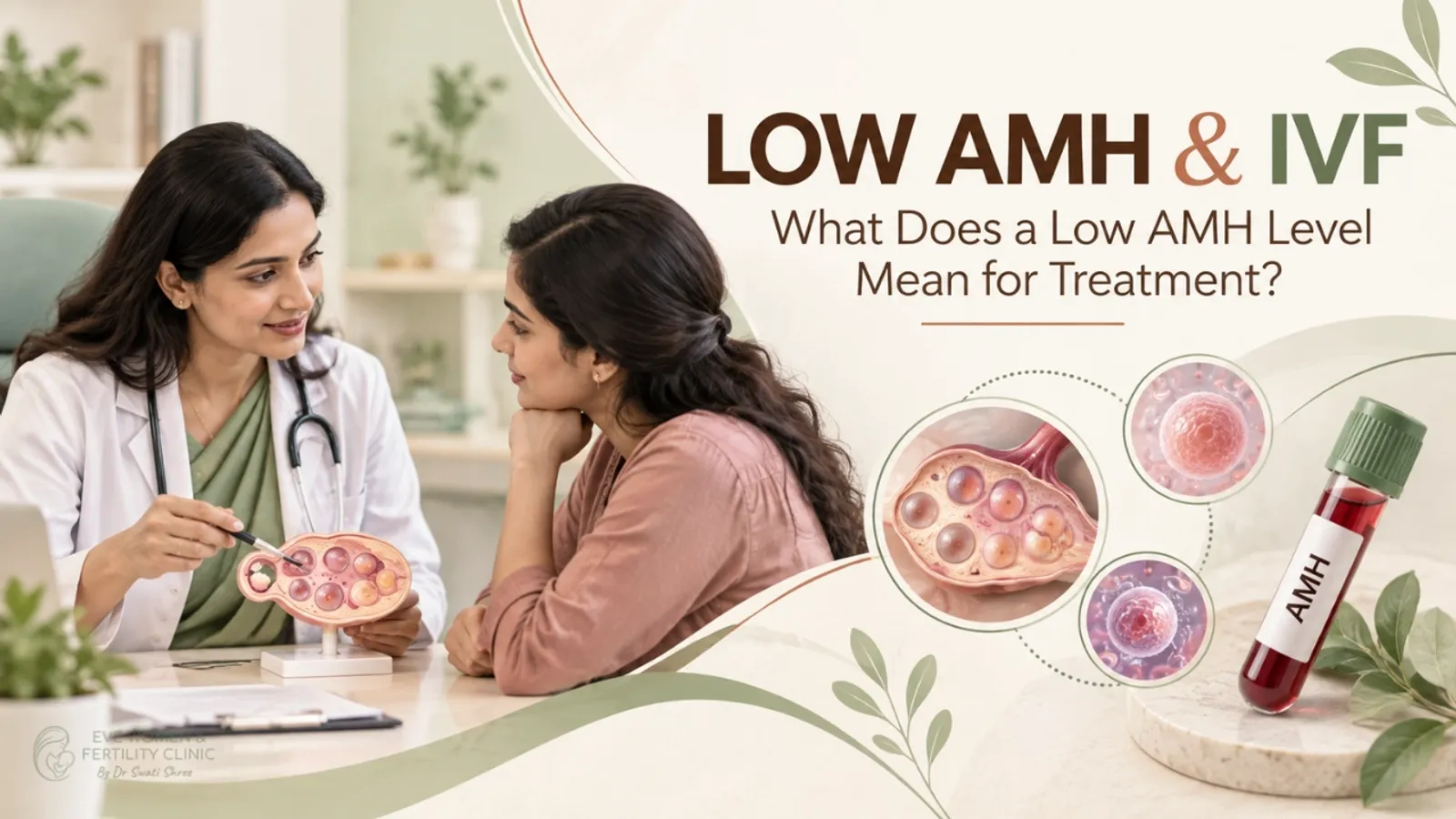
Quick answer: Low AMH predicts a lower number of eggs retrieved during IVF stimulation. Doctors may adjust medicine doses and protocols, consider accumulating embryos over more than one cycle, or discuss options such as donor eggs if response is very poor. Egg quality, which depends mainly on age, has a larger effect on pregnancy chances than AMH alone.
AMH is one of the most useful tests for planning IVF because it helps predict how the ovaries will respond to stimulation medicines. A low AMH usually means fewer eggs will be collected. It does not mean IVF cannot work, but it does influence how treatment is planned.
This article is part of our low AMH and ovarian reserve guide.
Why does AMH matter in IVF?
During IVF, medicines stimulate several follicles to grow so multiple eggs can be collected. AMH reflects how many follicles are available to respond. Lower AMH usually means fewer follicles respond, so fewer eggs are retrieved.
How is IVF adjusted for low AMH?
Individualised stimulation
Doctors choose medicine type and dose based on AMH, antral follicle count, age and previous response.
Different protocols
Antagonist protocols, mild stimulation or natural-cycle approaches may be considered depending on the patient.
Embryo accumulation
Some patients undergo more than one stimulation cycle to collect and freeze eggs or embryos before transfer.
Close monitoring
Frequent ultrasound and hormone checks guide timing of egg retrieval.
Does low AMH affect egg quality?
AMH measures quantity, not quality. A younger woman with low AMH may have fewer eggs but still have good-quality eggs and reasonable chances per embryo. Age remains the strongest predictor of egg quality.
What are realistic expectations?
Fewer eggs can mean fewer embryos and fewer chances per cycle. Some cycles may be cancelled if response is very low. Success rates vary widely depending on age and other factors, so ask your clinic for personalised guidance rather than general numbers.
What options exist if response is very low?
- Repeating stimulation with an adjusted protocol
- Accumulating embryos across cycles
- Donor eggs, which can offer higher success in some situations
- Discussing realistic goals and emotional support
Can supplements help?
Some supplements are promoted for low ovarian reserve, but evidence is limited or mixed. Discuss any supplement with your specialist before use.
Key Takeaways
- Low AMH predicts fewer eggs in IVF.
- Egg quality depends mainly on age.
- Protocols are tailored to low responders.
- Multiple cycles may be considered.
- Donor eggs are an option in some cases.
Final Thoughts
Low AMH changes how IVF is planned, not whether hope exists. A personalised approach and honest counselling help you make the right choices. Dr. Swati Shree at Eve Women and Fertility Clinic in Bengaluru plans IVF tailored to ovarian reserve.
FAQs
Can IVF work with low AMH?
Yes. IVF can work with low AMH, though fewer eggs are usually collected. Success depends strongly on age and egg quality, and treatment is tailored to your response. Yes, though fewer eggs are collected per cycle. The plan focuses on maximising each cycle: tailored doses, sometimes multiple cycles, and using every embryo well. Quality, not the count, decides the outcome.
How many eggs can I expect with low AMH?
Egg numbers vary widely depending on AMH, age, antral follicle count and protocol. Your specialist can give a personalised estimate after assessment. It varies widely, often single digits to low double digits depending on the level and your response. Your doctor predicts from the AMH, antral follicle count and past cycles, then sets expectations honestly.
Does low AMH mean my IVF cycle will fail?
Not necessarily. Low AMH predicts quantity, not quality. Younger women with low AMH can still achieve pregnancy with good-quality eggs. No. Low AMH predicts fewer eggs, not failure. Pregnancy depends on getting at least one good embryo, and many low-AMH cycles succeed. Unrealistic promises either way should be treated with caution.
Should I do multiple IVF cycles with low AMH?
Some patients benefit from more than one stimulation cycle to accumulate eggs or embryos. Your specialist will discuss whether this suits you. Sometimes it helps to bank embryos across two or three cycles before transferring, especially when reserve is very low. Your doctor weighs cost, time and response after seeing how the first cycle goes.
When are donor eggs considered?
Donor eggs may be considered when ovarian response is very low, repeated cycles have not succeeded or age significantly affects egg quality. This is a personal decision made after counselling. When own-egg chances are very low despite reasonable attempts, or reserve is essentially exhausted. It is a personal decision made after honest counselling about odds, not something any doctor should push early. When own-egg chances are very low despite reasonable attempts, or reserve is essentially gone. They offer high success and are a personal decision made after honest counselling, never pushed early.