Ovarian Hyperstimulation Syndrome Warning Signs
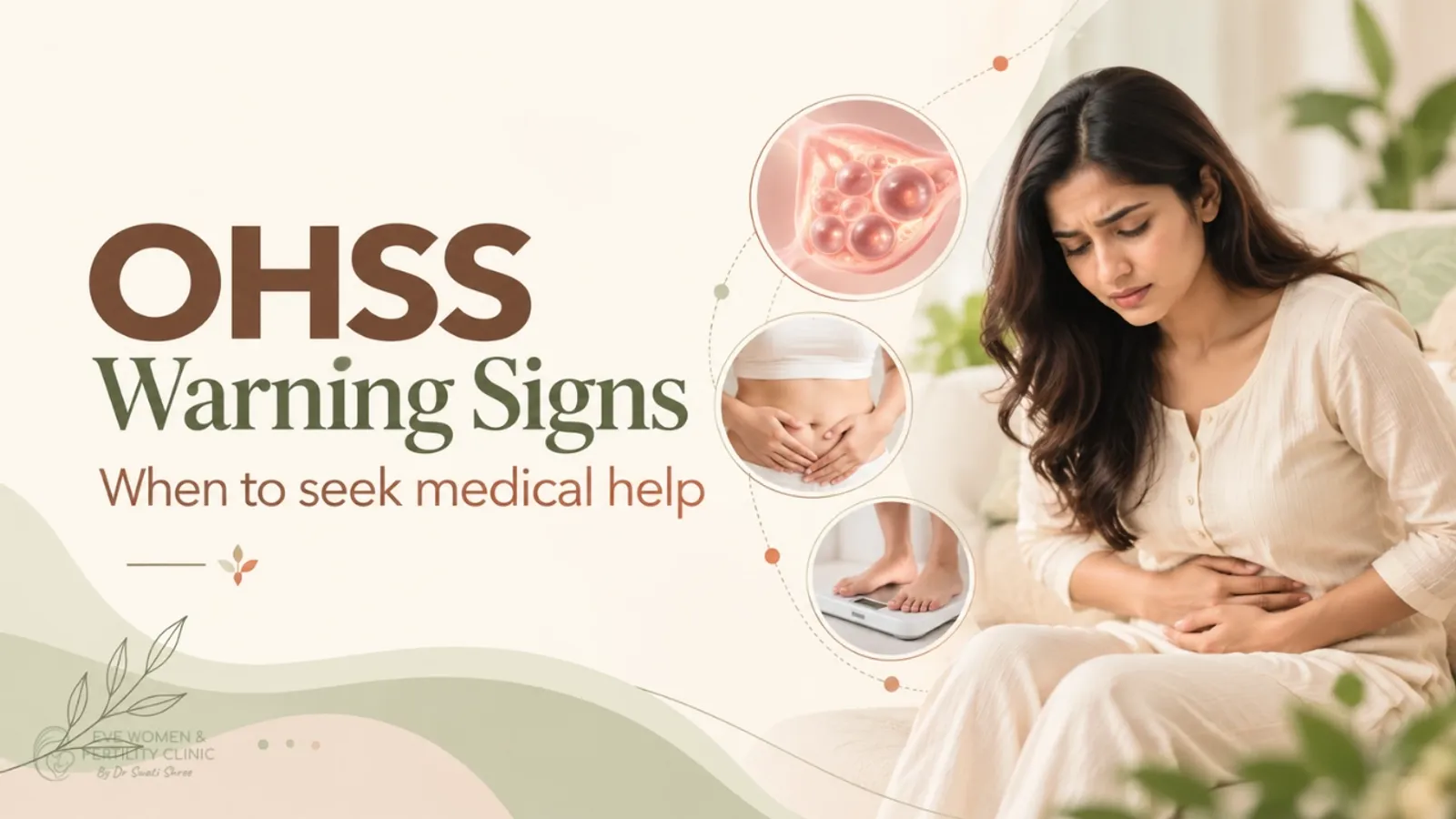
Quick answer: OHSS usually appears a few days after the egg trigger injection or in early pregnancy. Mild symptoms include bloating and mild abdominal discomfort. Warning signs of severe OHSS include rapid weight gain, severe abdominal pain, vomiting, reduced urination, shortness of breath and marked swelling. Contact your clinic or go to hospital urgently if these occur.
Ovarian hyperstimulation syndrome, or OHSS, is a condition that can occur when the ovaries overreact to fertility medicines. The ovaries enlarge and fluid leaks into the abdomen and sometimes the chest. Most cases are mild, but severe OHSS needs urgent care.
This article is part of our low AMH and ovarian reserve guide.
Why does OHSS happen?
Fertility medicines used to stimulate the ovaries can cause many follicles to develop. After the trigger injection, ovarian blood vessels become leaky because of chemical signals, allowing fluid to move into the abdomen. The risk is higher with high hormone levels, many follicles and pregnancy, which keeps hormone stimulation going.
Who is at higher risk?
Risk is higher in younger women, women with PCOS, those with high AMH or many antral follicles, those with a previous episode of OHSS, a high number of eggs retrieved and women with very high oestrogen levels during stimulation. Your specialist assesses risk and adjusts your plan.
What are the symptoms?
Mild
Bloating, mild abdominal pain, nausea and slight weight gain.
Moderate
More abdominal distension, nausea, vomiting and diarrhoea, with ultrasound showing enlarged ovaries and fluid.
Severe
Rapid weight gain over a few days, marked abdominal swelling and pain, persistent vomiting, very little urine, shortness of breath, dizziness, leg swelling or pain, and in rare cases blood clots.
How is OHSS prevented?
Doctors use individualised stimulation doses, close monitoring with scans and blood tests, trigger medicines that reduce risk in high-risk women, freezing all embryos for later transfer, and medicines that lower the risk in selected cases. Following your clinic's instructions helps.
How is it treated?
Mild OHSS is managed at home with rest, drinking fluids, monitoring weight and symptoms and pain relief approved by your doctor. Avoid anti-inflammatory painkillers unless advised. Moderate and severe cases may need hospital admission for fluids, monitoring, drainage of excess fluid, medicines to prevent clots and close observation. OHSS usually settles within one to two weeks, longer if pregnancy occurs.
What can you do at home?
Drink plenty of fluids including those with electrolytes, eat a protein-rich diet, avoid strenuous exercise and intercourse while ovaries are enlarged, weigh yourself daily and record your urine output if advised. Keep your clinic's emergency number handy.
When should you seek urgent help?
Seek urgent care for rapid weight gain, severe abdominal pain, shortness of breath, reduced urination, dizziness, calf swelling or pain, or persistent vomiting.
Key Takeaways
- OHSS is a risk of ovarian stimulation, mostly mild.
- High AMH, PCOS and young age raise the risk.
- Prevention strategies reduce risk.
- Severe symptoms need urgent care.
- It usually resolves with care.
Final Thoughts
OHSS is uncommon in its severe form, and clinics monitor closely to prevent it. Dr. Swati Shree at EVE Women and Fertility Clinic in Bengaluru individualises IVF stimulation to protect patient safety.
FAQs
What are the first signs of OHSS?
Early signs include bloating, mild abdominal discomfort, nausea and slight weight gain a few days after the trigger. Severe signs include rapid weight gain, severe pain, vomiting, breathlessness and reduced urination. Bloating, abdominal discomfort, mild nausea and quick weight gain within days of the trigger injection or egg collection. Mild cases settle alone; worsening swelling, vomiting or breathlessness needs same-day review.
How long does OHSS last?
Mild OHSS usually settles in about a week. If pregnancy occurs, symptoms can last longer, sometimes two weeks or more. Severe cases need medical care. Mild cases settle in about a week once the hormone levels fall. If pregnancy occurs, symptoms can linger a few weeks longer. Severe OHSS needing hospital care is uncommon with modern protocols.
Can OHSS be prevented?
Risk can be reduced by individualised medicine doses, careful monitoring, special trigger options and freezing all embryos for later transfer. Your specialist selects the safest protocol for you. Risk can be lowered a lot: antagonist protocols, an agonist trigger, adjusted doses and freezing all embryos instead of a fresh transfer. Women with PCOS or many follicles benefit most from these steps.
Does OHSS affect the chance of pregnancy?
OHSS itself does not necessarily reduce the chance of pregnancy, but doctors may freeze embryos and delay transfer until you recover. Pregnancy can prolong OHSS symptoms. The OHSS episode itself does not reduce your chances, but a fresh transfer is usually postponed so the body recovers. The frozen embryo transfer that follows has outcomes as good as a fresh one.
Should I go to hospital for bloating after egg collection?
Mild bloating is common. Go to the hospital or call your clinic for rapid weight gain, severe pain, vomiting, shortness of breath, very little urine or leg swelling. Mild bloating is expected. Go the same day if you have severe or worsening pain, marked swelling, vomiting, very little urine, leg swelling or breathlessness. When in doubt, call your clinic first.