
PCOS and Pregnancy: Can You Conceive Naturally?
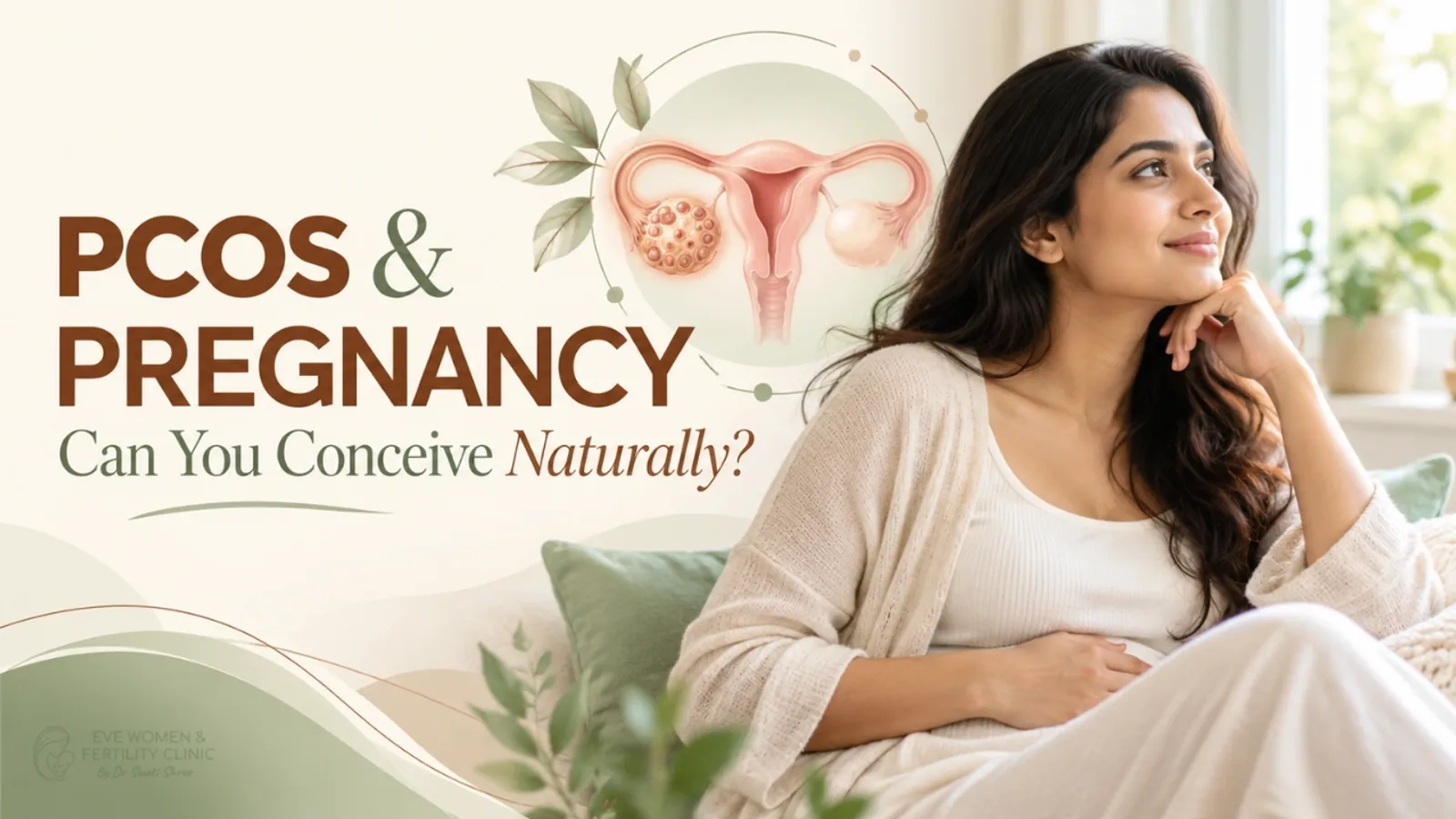
Quick answer: Many women with PCOS conceive naturally. The condition mainly affects how regularly the ovaries release an egg. When ovulation does happen, the fallopian tubes are open and the partner's semen results are normal, natural conception is possible, though it may take longer than average.
If your periods come every 45 days, or skip months altogether, you may be wondering whether pregnancy is still possible without treatment. In many cases it is. Polycystic ovary syndrome (PCOS) mostly interferes with the timing of ovulation, and that timing is usually the first thing worth investigating.
This article is part of our PCOS and fertility guide.
What PCOS changes about ovulation
Each cycle, a follicle in the ovary is meant to mature and release an egg. In PCOS, follicles often begin to develop but do not reach release on schedule, or do not reach it at all. The ovaries are still active. What's missing is a predictable rhythm.
Can a period tell you that ovulation happened?
Not reliably. Bleeding and ovulation are linked, but a woman can bleed without releasing an egg. Many women only learn this after a blood test or a scan.
Can you conceive naturally with PCOS?
For many women, yes. A regular 28-day cycle makes fertile days easy to estimate. With PCOS, cycles may stretch to 35 to 60 days, or shift in length from one month to the next. Ovulation kits can also give unclear readings. Couples often do better with regular intercourse through the cycle than with a single guessed date.
How long should you try before seeing a doctor?
For women under 35 without known problems, specialists generally suggest a fertility evaluation after 12 months of trying. From age 35, the advice is to come in after 6 months. If your periods are very infrequent, there is little point in waiting for those milestones. Infrequent ovulation may be the reason pregnancy is delayed, and an early check can save months of guesswork.
What tests are needed?
A PCOS diagnosis is only one part of the picture. A proper assessment looks at both partners.
| Test | What it tells you |
|---|---|
| Ovulation check (cycle history, blood tests, ultrasound) | Whether an egg is being released |
| Tubal assessment | Whether the fallopian tubes are open |
| Semen analysis | Sperm count, movement and shape |
| AMH and antral follicle count | Ovarian reserve, which is separate from fertility |
Lifestyle and Diet
Lifestyle changes can help many women feel better and support metabolic health, though they are rarely a quick fix. Regular activity, adequate sleep, balanced meals and steady blood sugar all play a part. Rice, dal and roti don't need to leave the plate. Portion size and consistency usually count for more than strict elimination. Body weight is also not the whole story, since women at many different weights have PCOS, and many of them conceive.
When is ovulation treatment considered?
Doctors usually start with ovulation induction when ovulation is absent and no other major factor is present. The international PCOS guideline recommends letrozole, a tablet taken by mouth, as the first-line choice. It should only be started on a doctor's prescription, with monitoring to match.
Follicular monitoring uses a series of ultrasound scans to show how the ovary responds. Those results help time intercourse or IUI. IVF is seldom the first step for PCOS. It is generally discussed after other treatments have not led to pregnancy, or when another factor, such as blocked tubes, makes it the better route.
Risks and Limitations
Some women with PCOS respond strongly to ovulation medicines. In uncommon cases, this can lead to ovarian hyperstimulation syndrome (OHSS), so treatment is planned with that risk in mind. PCOS is also linked to a slightly higher chance of gestational diabetes and high blood pressure in pregnancy, which is why early monitoring helps. These are patterns seen across large groups of women. They cannot predict what will happen in your pregnancy.
When should you see a doctor?
Book a consultation if your periods are very irregular or absent, if you have been trying for the timeframes above, or if you have a known tubal, endometriosis or semen concern.
Seek urgent care for severe pelvic pain, rapid abdominal swelling, breathlessness, very little urine, heavy bleeding, fainting or one-sided pelvic pain in early pregnancy. A fever after a procedure also needs prompt review.
Key Takeaways
- PCOS rarely makes pregnancy impossible, but it often makes timing unpredictable.
- Confirming whether you ovulate is usually the most useful first step.
- Many women conceive naturally once ovulation becomes regular.
- Both partners should be evaluated.
- Treatment decisions depend on the full workup, not the diagnosis label alone.
Final Thoughts
- Medical Disclaimer
- This article is for educational purposes only and does not replace professional medical advice. Fertility treatment outcomes vary from person to person. Please consult a qualified doctor for diagnosis and treatment.
Trying to conceive with irregular cycles can wear you down, especially when every month brings the same question. Clarity helps. Once you know whether and when you ovulate, the next steps tend to become much easier to plan.
If you are in Gunjur or nearby East Bangalore, Dr. Swati Shree at EVE Women and Fertility Clinic, Gunjur, Bangalore, can review your cycle history and plan the right tests with you. Advanced IVF is carried out through partner fertility centres.
FAQs
Can PCOS stop me from getting pregnant naturally?
PCOS does not stop pregnancy by itself, but it often makes ovulation irregular, which reduces the number of fertile days. Plenty of women with PCOS conceive without medication once ovulation is confirmed. A fertility assessment can show whether ovulation, the tubes and semen results are working in your favour.
Why are my periods so irregular if I am trying to conceive?
Irregular cycles usually mean ovulation is happening rarely, or not at all. Hormonal changes linked to PCOS can delay follicle maturity, so cycle length keeps shifting. A doctor can check hormone levels and arrange a scan to confirm what is going on. That is more reliable than counting days on a calendar.
If I have PCOS, will I need IVF?
IVF is not usually the first step. Most women with PCOS are first evaluated for timed intercourse or ovulation induction, and some then move on to IUI. IVF is generally considered when those options have not led to pregnancy, or when another factor such as tubal disease is present. The right route is decided after a full assessment.
Should my partner have a semen test?
Usually, yes. Fertility difficulties can involve the woman, the man, both partners, or sometimes no obvious cause. A semen analysis looks at sperm count, movement and shape. Getting it done early means a male factor is not overlooked while ovulation treatment is underway, which can save time and frustration later.
How does IUI work for women with PCOS?
IUI is considered in selected cases, usually once ovulation has been induced or is being closely monitored. Sperm is washed and prepared in the laboratory, then placed into the uterus close to the time of ovulation. Fertilisation still happens inside the body. Age, sperm quality, tube status and earlier treatment all shape whether it suits you.
Where can I get PCOS fertility care in East Bangalore?
Dr. Swati Shree sees patients at EVE Women and Fertility Clinic in Gunjur, Bangalore. Care includes fertility assessment, counselling, ovulation induction, follicle monitoring and IUI. If IVF becomes the plan, egg retrieval and embryo transfer take place at partner fertility centres, and your care team explains that pathway step by step.